
AJ Soundfield
Well-known member
It's all subjective.But everyone finds their enjoyment in their own way.
Except for objective categories like amplifier class
Then I have to know what I'm listening to. Cuz you know, it's all subjective ;-)

It's all subjective.But everyone finds their enjoyment in their own way.
I should also say that I never question what someone says they heard or didn’t hear because how would I know? Sometimes the more interesting question is why we perceive what we perceive. I changed out a couple of cables not long ago and I certainly perceived an improvement. If someone asked me if that could be attributable at least in part to the placebo effect my honest answer would have to be I don’t have any idea. I know I am subject to the same sort of implicit bias that pertains to the human race and short of an objective measurement or a blind test I can only say what I perceived, not why.
Unlike the objectivist camp, I’m OK with that because to me it’s listening to music and it’s fun. I don’t make a science project out of it. But everyone finds their enjoyment in their own way.

That's the key - to have someone lead you. The first time I sat with Bernie Grundman mastering an album, he poked buttons and pushed sliders and things got better and better. I had thought that I was a good listener, having horned my craft over hundreds and thousands of hours designing loudspeakers.It's not that many CAN'T hear the difference (yet are quick to put down those who CAN and always claim its some bias), it's that they haven't been taught HOW to listen and WHAT to listen for.
Hi Gary,So, I ask myself everyday - what are the things I can hear but still have difficulty quantifying and don't even know what to measure, set alone how to measure it.

Seems even Harbeth are among the heretics now and can't see-know, excuse me, "hear" the dry sterility in their own products like audiophiles can.Or, listening a superb British speaker with a Class A amplifier (First Watt, or the tubed Audio Mirror for example)

Really not sure what the heck your point is AJ. It is kind of funny that the article you link is on their outlier product to fit a particular niche. The latest "craze" of self-contained speakers/monitors. Not their standard lineup product for normal 2-channel listing. But, whatever, they do have Harbeth name on them and they come from Alan Shaw. I like British speakers natural inviting sound, and I differ from Mr. Shaw (and have debated him as such) in that he firmly falls into the measurement category. I have never heard either of the two self-contained powered speakers in their lineup. Therefore, I reserve all judgements thereof.Seems even Harbeth are among the heretics now and can't see-know, excuse me, "hear" the dry sterility in their own products like audiophiles can.
https://twitteringmachines.com/review-harbeth-nle-1-professional-monitor-loudspeakers/
Actives simplify things and do cut down on the number of components and cabling etc needed, but that could create OCD problems in of itself, so...YMMV.
cheers,
AJ
That Alan Shaw may have joined the stone deaf? Seems his stellar hearing that produced all those wonderful warm n cozy Brit sound Harbeths that audiophiles swoon over, suddenly failed when he put Class D amps in these. How else would one explain him not hearing the sterility, glare and whatnot at the sight...excuse me, sound of Class D??Really not sure what the heck your point is AJ.
That "latest craze" may be older than you suspect https://www.stereophile.com/content...peaker-studio-monitor-1092a-powered-subwoofer the 1031A intro's around 1991. At least 35yrs latest I guess ;-).The latest "craze" of self-contained speakers/monitors.
Strangely they list them as "pair" https://harbeth.co.uk/nle-1/Not their standard lineup product for normal 2-channel listing.
Give them a spin if you get a chance, you will of course know priori that they are Class D, but alas....I have never heard either of the two self-contained powered speakers in their lineup. Therefore, I reserve all judgements thereof.
 .
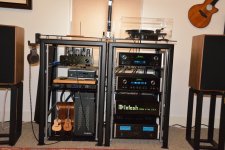
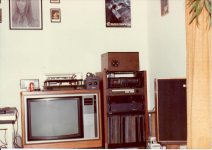
Was always KEF fan back in the old days (after I found the 104aB and never turned back). Then when I updated years ago now it was KEF, both small and larger. I tried Magnapans and thought they were a great speaker but hard to fit comfortably in my small rooms. Back to KEF. Even though they were good, I felt that I would have to go above my budget to get their made in England models. Read a lot about Harbeth and do believe their hand made in England is carrying on the British sound torch. I do indeed like the models I have tried and/or heard.
I used to sell M&K Sat/Sub system back in the day. And then Bose later on. The subs were powered but still used a standard configuration amplifier.
When I stated 2-channel I was referring to 2 speakers (with or without sub) and standard amplifier design (stereo listening). Not just speakers coming in a pair. But you already knew that but had a sarcastic moment
Are not almost all self-powered speakers Class D? The advantages of Class D do indeed fit the amp built in speaker design. I assume there are some exotic models with Class A or A/B amplifiers, but I am not familiar with them.
And yes, like many technologies such as self-powered speakers do go back a way. But they were never in demand, a craze if you will, until the last few years.
View attachment 35870View attachment 35869
Most but a few like active version of your old KEFs use ABAre not almost all self-powered speakers Class D?
Lower heat for sure. No question the old Class D had all sorts of HF filtering and line noise issues. That's what gained them a bad rap. The newer SOTA designs by folks like Bruno Putzeys ended all that, the HF and noise are indistinguishable from good A/AB. Hence absolute SOTA flagship models from MBL, YG, Meridian, Kii, D&D etc all use D. Flagships from Klipsch, B&W etc are active but not sure what amps are used.The advantages of Class D do indeed fit the amp built in speaker design.
Nice.
Gary I'm a bit skeptical. However if you bring your speakers down to the FL Audio Expo 27 you can show me yourselfEven when used just in the bass, the difference is audible. We modified the Hypex UcD modules for bass duties. Didn't measure any difference, but even just walking into the room, I could hear if my tech had forgotten to put in the mod.

The Avant Gardes were designed with a solid state amp in mind. They are one of the few horn speakers where the Voltage drive rules are used as opposed to the older (pre-1956) Power drive rules that are used with vintage Altec, EV, JBL and the like. For more on thisHey Here Here - How do you like having very powerful amps with very high efficiency speaker? Have you ever tried very low power like 45 or 2A3's? (300B's sound broken and boring compared to 45's or 2A3's).
My personal experience is I prefer the opposite - low power amps with horn speakers.
Class D amps vary as much in sound as any other class or as much as tube amps do. Just because you heard 3 or 4 amps really does not say anything.I've tried a number of Class D amplifiers, and they just don't sound quite right to me. I can't really qualify it, but I don't like them.
That 'left behind' thing is from the perspective of manufacturing. I made that comment because I heard a class D amp (about 9 years ago now) that was so good it was obviously challenging our triode class A OTLs. So I figured it was past time to get a handle on it. This does not mean that a consumer is getting left behind.Well the title of the thread states switched to class D or get left behind? That insinuates very strongly that is the class of choice which for me at least it is not. That doesn't mean it isn't for someone else but i certainly dont' feel left behind.
Cheers!
George

Part of the issue with compares is there is no time to sit and digest the music. In a compare, most people are going to gravitate to what stands out and grabs your attention.
A prime example is a compression driver for a horn I have been messing with. If I put the Radian 745 neo with aluminum dome in, its immediately obvious the detail is much higher. Its plainly more natural and true to life. BUT. I have a hard time getting through a single song without flipping to the next song. Then, I flipped through a few more songs. Then turn off the stereo. When I put the polymer Beyma CD on, I immediately know the detail is less. Not quite as natural. Not as real. BUT, I will put on a song then continue to listen to the whole album. Then I will put on another album. I will sit for 2 hours listening.
So which compression driver is better. It's the one that is obviously more natural.And realistic sounding. Or the one that actually engages me and has me sit for hours listening.
I have a 1.4 inch exit. JBL is 2, I think.Curious if you've used or heard any JBL compression drivers? I personally love whatever the one is in my 4367. I've heard other JBL models I thought were good as well. I find them clean and detailed without fatigue some of that depends on source I'm sure.
Frankly, I think you’ve nailed it. I have a small system running on a pair of Fosi V3s that sounds better than it has a right to. I also have a Rowland model 10 class D amp with upgraded power supplies that, after having some undisclosed issues addressed, sounds better than any amp I’ve ever owned in that system, and I’ve had a few good ones.Class D is very very good. And its affordable. Some would say Atmasphere is expensive. But I say the amps driving the M9 in another thread are expensive. Are Class D amps going to replace them. Probably not for a variety of reason. Many with nothing to do about sound. And plenty to do with sound.
Class D is shocking good when you consider a young couple in a condo with a pair of book shelf streaming Spotify. And thats probanly 90% of the market for stereo gear. As they look for a little better, and some more better, class D is going to remain the price point they can afford. Not tube and not AB. Not unless one or the other starts earning real money.
You are making a point that I believe I have tried to make several times. Yes, there are folks who can and will buy the ultra-end of audio gear. But I also believe a vast majority of the market is the young couple in a condo who enjoy music but can't or do not want to afford crazy levels. I also believe that both manufactures, and especially magazines are missing the target by emphasizing the ultra hi end and mainly as exclusion of entry level. The future audio enthusiast will come from the entry level for the most part. The smartest companies realize this. This is just my opinion, I expect in a forum such as this many will disagree. But I say in total confidence it has for the most part always been this way and today I it is even more so.Class D is very very good. And its affordable. Some would say Atmasphere is expensive. But I say the amps driving the M9 in another thread are expensive. Are Class D amps going to replace them. Probably not for a variety of reason. Many with nothing to do about sound. And plenty to do with sound.
Class D is shocking good when you consider a young couple in a condo with a pair of book shelf streaming Spotify. And thats probanly 90% of the market for stereo gear. As they look for a little better, and some more better, class D is going to remain the price point they can afford. Not tube and not AB. Not unless one or the other starts earning real money.