I didn’t intend to be dismissive. Everyone likes something different and while I have not chosen to go to class de route, I have heard class D amplifiers that I thought were very pleasing.You shouldn't be so quick to be dismissive. It also seems to be audiophiles are the only ones who are prone to product d elusions. So many get a kick out of being anti-audiophile in attitude.. Not saying this is you.
Everyone needs to consider people listen differently. I've honestly have gone to a friend's house who is an audiophile and his system was in mono without him realizing it. It took me only a couple seconds and brought it to his attention. Another fallacy is listening being equated to hearing acuity. Perfect hearing will not allow one to hear the differences in gear or cables or whatever. This takes experience and learning what to listen for. It also helps if you use a system you are familiar with. Some who have had systems for years may still never get it. You have to listen intently enough to pick up on nuances. There are different depths to which we listen. If someone doesn't listen with depth or intensity they may never get it. I think that's why some don't understand claims that are made by others. If they can't hear it, it must not be true.
It's simple for me there are aspects I hear in my amplifier that no Class D so far has delivered. I am the type of person that just sits and listens though, no browsing phone or whatever, no other side distractions.
AJ is a joker, jester, if that story is even true I'm confident I wouldn't have been fooled.

You are using an out of date browser. It may not display this or other websites correctly.
You should upgrade or use an alternative browser.
You should upgrade or use an alternative browser.
Switched to Class D or get left behind?
- Thread starter nc42acc
- Start date
You brought up a great point
It's not that many CAN'T hear the difference (yet are quick to put down those who CAN and always claim its some bias), it's that they haven't been taught HOW to listen and WHAT to listen for.
I've been very fortunate to have several well regarded friends in the the recording industry teach me how and what to listen for and how to remove pre-conceived biases. Yes you still need to remain vigilant about it - but just because some people aren't able doesn't mean everyone is unable.
And let's be honest, you can make a poll or a study look any way you'd like - look at how many studies claim milk is good for you, then it's bad for you, then another study claims it's good,
I should also say that I never question what someone says they heard or didn’t hear because how would I know? Sometimes the more interesting question is why we perceive what we perceive. I changed out a couple of cables not long ago and I certainly perceived an improvement. If someone asked me if that could be attributable at least in part to the placebo effect my honest answer would have to be I don’t have any idea. I know I am subject to the same sort of implicit bias that pertains to the human race and short of an objective measurement or a blind test I can only say what I perceived, not why.I didn’t intend to be dismissive. Everyone likes something different and while I have not chosen to go to class de route, I have heard class D amplifiers that I thought were very pleasing.
Unlike the objectivist camp, I’m OK with that because to me it’s listening to music and it’s fun. I don’t make a science project out of it. But everyone finds their enjoyment in their own way.

AJ Soundfield
Well-known member
It's all subjective.But everyone finds their enjoyment in their own way.
Except for objective categories like amplifier class
Then I have to know what I'm listening to. Cuz you know, it's all subjective ;-)
Mr Peabody
Well-known member
I should also say that I never question what someone says they heard or didn’t hear because how would I know? Sometimes the more interesting question is why we perceive what we perceive. I changed out a couple of cables not long ago and I certainly perceived an improvement. If someone asked me if that could be attributable at least in part to the placebo effect my honest answer would have to be I don’t have any idea. I know I am subject to the same sort of implicit bias that pertains to the human race and short of an objective measurement or a blind test I can only say what I perceived, not why.
Unlike the objectivist camp, I’m OK with that because to me it’s listening to music and it’s fun. I don’t make a science project out of it. But everyone finds their enjoyment in their own way.
I was always on a budget I was hoping not to hear a difference in order not to spend money, LOL. I figure if I hear enough difference to get me to spend money it must be real. I also take the piece out and ask if I can be happy without it.
If you enjoy Class D that's fine. You are in good company. I'm just tired of the over marketing and attitude of some regarding the topology.

garylkoh
Active member
That's the key - to have someone lead you. The first time I sat with Bernie Grundman mastering an album, he poked buttons and pushed sliders and things got better and better. I had thought that I was a good listener, having horned my craft over hundreds and thousands of hours designing loudspeakers.It's not that many CAN'T hear the difference (yet are quick to put down those who CAN and always claim its some bias), it's that they haven't been taught HOW to listen and WHAT to listen for.
But until then, I hadn't realized how much of what I heard can be quantified and qualified. I struggled to hear very change that Bernie made. And when he noticed the pained expression on my face, on the next track, he explained every change, and let me A/B every change that he made. Most of the changes I had to strain to hear the difference. Over a few mastering sessions, I had become a very much better listener.
Scientists have shown that:
1. Temporal acuity of human hearing beats Fourier uncertainty principle:
2. Threshold of hearing is close to quantum noise and uncertainty principle (did I hear that or didn't I ???)
So, I ask myself everyday - what are the things I can hear but still have difficulty quantifying and don't even know what to measure, set alone how to measure it.
AJ Soundfield
Well-known member
Hi Gary,So, I ask myself everyday - what are the things I can hear but still have difficulty quantifying and don't even know what to measure, set alone how to measure it.
If you claim you can outrun Usain Bolt, you don't need to measure anything, just demonstrate it on a track.
If you claim you can "hear" class D vs A, AB etc, you don't have to measure a thing, just demonstrate it. How that's done, is by not using your eyes, volume, priori knowledge etc, but rather "trust your ears, just listen". Which, unbeknown to audiophiles, by definition, is a controlled blind listening test.
Now if you must see, know, believe, read, be lead, mismatch volumes etc to "hear" something, well, here we are ;-).
In the end, when, not if, audiophiles fail to hear any difference between D and A/AB (SS not tubes), there will still be the visible, knowledge etc factor that will cause psychogenic drama, ergo...buy whatever pleases one most, in fully sighted and uncontrolled "listening". Pretty simple concept really.

Randy Myers
Well-known member
I 100% believe that truly enjoying an audiophile system and being able to hear subtle differences is a learned trait. Anyone can hear the difference when they listen to a "good system" for the first time. However, understanding what they are hearing and comparing systems takes time and practice. It also comes down to both individual preferences and the importance of the subtleties to that person. Some people, such as my wife could care less about the differences. She enjoys music, but certainly not to just sit down and listen. She actually has a hard time understanding when I do go into the music room and just listen to music.
This is why I say to really understand, perceive, and care about the differences and enjoy the differences is something that takes time to develop. I always loved listening to good music, but understanding what I preferred and perceiving these differences is something that took decades to develop.
Many times, I listen to music because I like the artist. For example, I really love Amy Lee's voice, and I have to get anything new Evanescence comes out with (which is almost always years waiting). I would not say their albums are "audiophile" recordings, but I enjoy the music. Other times I want to sit and listen to the highest quality in my collection. It all depends on mood I suppose.
I have never been a person who likes A/B comparisons, especially with neophytes. Comparisons are not easy under the best circumstances, and very hard under most A/B comparison sessions. Familiarity with the music/track is essential. Enjoying the particular track is also important. Many other variables come into play. For example, I have had my system in a small room for quite some time now. Doing a comparison in a larger room would not be conducive to me hearing differences. Listening with a room full of people would make it damn near impossible.
The type of speakers being used. For example, if the comparison was done using horn speakers, I would probably find the entire process irritating. But others in the group might find that listening to a British made speaker was not up their ally. They want the dynamics and thump of large woofers and horns, purely as an example. I might enjoy one thing over another, but comparing different type of amplifiers, or cables, or many other things, would be hard in these situations.
This is why I say I have heard Class D amplifiers sound very good. However, every Class D I have actually owned and listened to in my environment, with my music, my DAC, my other gear, have sounded rather sterile. What I describe as lacking the warm and fuzzy feeling to me. They were good, however not inviting long term, like something I look forward to sitting down and doing serious listening, sort of like when I listen to my Woo headphone amp with top notch NOS tubes and my Abyss headphones. Or, listening a superb British speaker with a Class A amplifier (First Watt, or the tubed Audio Mirror for example), or for long term satisfaction such as McIntosh, MBL, Job (all of which I enjoyed the most in my system). A very inviting listening session is how I describe it. This is a very difficult A/B comparison under the best of circumstances.
This is why I say to really understand, perceive, and care about the differences and enjoy the differences is something that takes time to develop. I always loved listening to good music, but understanding what I preferred and perceiving these differences is something that took decades to develop.
Many times, I listen to music because I like the artist. For example, I really love Amy Lee's voice, and I have to get anything new Evanescence comes out with (which is almost always years waiting). I would not say their albums are "audiophile" recordings, but I enjoy the music. Other times I want to sit and listen to the highest quality in my collection. It all depends on mood I suppose.
I have never been a person who likes A/B comparisons, especially with neophytes. Comparisons are not easy under the best circumstances, and very hard under most A/B comparison sessions. Familiarity with the music/track is essential. Enjoying the particular track is also important. Many other variables come into play. For example, I have had my system in a small room for quite some time now. Doing a comparison in a larger room would not be conducive to me hearing differences. Listening with a room full of people would make it damn near impossible.
The type of speakers being used. For example, if the comparison was done using horn speakers, I would probably find the entire process irritating. But others in the group might find that listening to a British made speaker was not up their ally. They want the dynamics and thump of large woofers and horns, purely as an example. I might enjoy one thing over another, but comparing different type of amplifiers, or cables, or many other things, would be hard in these situations.
This is why I say I have heard Class D amplifiers sound very good. However, every Class D I have actually owned and listened to in my environment, with my music, my DAC, my other gear, have sounded rather sterile. What I describe as lacking the warm and fuzzy feeling to me. They were good, however not inviting long term, like something I look forward to sitting down and doing serious listening, sort of like when I listen to my Woo headphone amp with top notch NOS tubes and my Abyss headphones. Or, listening a superb British speaker with a Class A amplifier (First Watt, or the tubed Audio Mirror for example), or for long term satisfaction such as McIntosh, MBL, Job (all of which I enjoyed the most in my system). A very inviting listening session is how I describe it. This is a very difficult A/B comparison under the best of circumstances.
Last edited:
AJ Soundfield
Well-known member
Seems even Harbeth are among the heretics now and can't see-know, excuse me, "hear" the dry sterility in their own products like audiophiles can.Or, listening a superb British speaker with a Class A amplifier (First Watt, or the tubed Audio Mirror for example)

https://twitteringmachines.com/review-harbeth-nle-1-professional-monitor-loudspeakers/
Actives simplify things and do cut down on the number of components and cabling etc needed, but that could create OCD problems in of itself, so...YMMV.
cheers,
AJ
Randy Myers
Well-known member
Really not sure what the heck your point is AJ. It is kind of funny that the article you link is on their outlier product to fit a particular niche. The latest "craze" of self-contained speakers/monitors. Not their standard lineup product for normal 2-channel listing. But, whatever, they do have Harbeth name on them and they come from Alan Shaw. I like British speakers natural inviting sound, and I differ from Mr. Shaw (and have debated him as such) in that he firmly falls into the measurement category. I have never heard either of the two self-contained powered speakers in their lineup. Therefore, I reserve all judgements thereof.Seems even Harbeth are among the heretics now and can't see-know, excuse me, "hear" the dry sterility in their own products like audiophiles can.
https://twitteringmachines.com/review-harbeth-nle-1-professional-monitor-loudspeakers/
Actives simplify things and do cut down on the number of components and cabling etc needed, but that could create OCD problems in of itself, so...YMMV.
cheers,
AJ
AJ Soundfield
Well-known member
That Alan Shaw may have joined the stone deaf? Seems his stellar hearing that produced all those wonderful warm n cozy Brit sound Harbeths that audiophiles swoon over, suddenly failed when he put Class D amps in these. How else would one explain him not hearing the sterility, glare and whatnot at the sight...excuse me, sound of Class D??Really not sure what the heck your point is AJ.
That "latest craze" may be older than you suspect https://www.stereophile.com/content...peaker-studio-monitor-1092a-powered-subwoofer the 1031A intro's around 1991. At least 35yrs latest I guess ;-).The latest "craze" of self-contained speakers/monitors.
Strangely they list them as "pair" https://harbeth.co.uk/nle-1/Not their standard lineup product for normal 2-channel listing.
Give them a spin if you get a chance, you will of course know priori that they are Class D, but alas....I have never heard either of the two self-contained powered speakers in their lineup. Therefore, I reserve all judgements thereof.
Must confess I haven't been keeping up, remember you had KEF, then Maggies (or vice versa?), just looked at your list and now see you're...Harbeth. Hah ;-).
cheers,
AJ
Randy Myers
Well-known member
Was always KEF fan back in the old days (after I found the 104aB and never turned back). Then when I updated years ago now it was KEF, both small and larger. I tried Magnapans and thought they were a great speaker but hard to fit comfortably in my small rooms. Back to KEF. Even though they were good, I felt that I would have to go above my budget to get their made in England models. Read a lot about Harbeth and do believe their hand made in England is carrying on the British sound torch. I do indeed like the models I have tried and/or heard.
I used to sell M&K Sat/Sub system back in the day. And then Bose later on. The subs were powered but still used a standard configuration amplifier.
When I stated 2-channel I was referring to 2 speakers (with or without sub) and standard amplifier design (stereo listening). Not just speakers coming in a pair. But you already knew that but had a sarcastic moment .
.
Are not almost all self-powered speakers Class D? The advantages of Class D do indeed fit the amp built in speaker design. I assume there are some exotic models with Class A or A/B amplifiers, but I am not familiar with them.
And yes, like many technologies such as self-powered speakers do go back a way. But they were never in demand, a craze if you will, until the last few years.
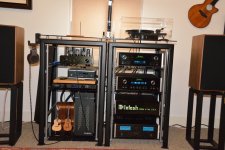
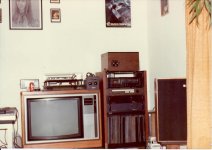
I used to sell M&K Sat/Sub system back in the day. And then Bose later on. The subs were powered but still used a standard configuration amplifier.
When I stated 2-channel I was referring to 2 speakers (with or without sub) and standard amplifier design (stereo listening). Not just speakers coming in a pair. But you already knew that but had a sarcastic moment
.Are not almost all self-powered speakers Class D? The advantages of Class D do indeed fit the amp built in speaker design. I assume there are some exotic models with Class A or A/B amplifiers, but I am not familiar with them.
And yes, like many technologies such as self-powered speakers do go back a way. But they were never in demand, a craze if you will, until the last few years.
Last edited:
Mr Peabody
Well-known member
Was always KEF fan back in the old days (after I found the 104aB and never turned back). Then when I updated years ago now it was KEF, both small and larger. I tried Magnapans and thought they were a great speaker but hard to fit comfortably in my small rooms. Back to KEF. Even though they were good, I felt that I would have to go above my budget to get their made in England models. Read a lot about Harbeth and do believe their hand made in England is carrying on the British sound torch. I do indeed like the models I have tried and/or heard.
I used to sell M&K Sat/Sub system back in the day. And then Bose later on. The subs were powered but still used a standard configuration amplifier.
When I stated 2-channel I was referring to 2 speakers (with or without sub) and standard amplifier design (stereo listening). Not just speakers coming in a pair. But you already knew that but had a sarcastic moment
Are not almost all self-powered speakers Class D? The advantages of Class D do indeed fit the amp built in speaker design. I assume there are some exotic models with Class A or A/B amplifiers, but I am not familiar with them.
And yes, like many technologies such as self-powered speakers do go back a way. But they were never in demand, a craze if you will, until the last few years.
View attachment 35870View attachment 35869
I haven't fact checked it I was told by a VS owner his used Class A/B for the bass.
garylkoh
Active member
Even when used just in the bass, the difference is audible. We modified the Hypex UcD modules for bass duties. Didn't measure any difference, but even just walking into the room, I could hear if my tech had forgotten to put in the mod.
AJ Soundfield
Well-known member
Most but a few like active version of your old KEFs use ABAre not almost all self-powered speakers Class D?
Lower heat for sure. No question the old Class D had all sorts of HF filtering and line noise issues. That's what gained them a bad rap. The newer SOTA designs by folks like Bruno Putzeys ended all that, the HF and noise are indistinguishable from good A/AB. Hence absolute SOTA flagship models from MBL, YG, Meridian, Kii, D&D etc all use D. Flagships from Klipsch, B&W etc are active but not sure what amps are used.The advantages of Class D do indeed fit the amp built in speaker design.
Nice.
You going between KEF/Maggie/Harbeth is exactly why I got off the sidelines years ago with my variable directivity designs. Why not have it all? ;-)
cheers
AJ Soundfield
Well-known member
Gary I'm a bit skeptical. However if you bring your speakers down to the FL Audio Expo 27 you can show me yourselfEven when used just in the bass, the difference is audible. We modified the Hypex UcD modules for bass duties. Didn't measure any difference, but even just walking into the room, I could hear if my tech had forgotten to put in the mod.

atmasphere
Active member
The Avant Gardes were designed with a solid state amp in mind. They are one of the few horn speakers where the Voltage drive rules are used as opposed to the older (pre-1956) Power drive rules that are used with vintage Altec, EV, JBL and the like. For more on thisHey Here Here - How do you like having very powerful amps with very high efficiency speaker? Have you ever tried very low power like 45 or 2A3's? (300B's sound broken and boring compared to 45's or 2A3's).
My personal experience is I prefer the opposite - low power amps with horn speakers.
If you use Power paradigm amps (zero feedback tube amp) on a speaker designed to be driven by a Voltage source, you'll likely get a tonal anomaly. The controls that are on the back of older speakers designed be driven by an amp that behaves more like a Power source are there so the speaker can be adjusted to the power response of the amplifier. So sometimes you can get them to behave with an amplifier that can operate as a Voltage source.
But speakers that are meant to be Voltage driven (which is probably about 98-99% of speakers made) will not have any controls. All I'm saying here is that when you do a comparison, its important to be aware of this; my speakers at home are meant to be power driven so have controls. I was able to find a setting so they work with the class D amps I'm using. But it took some fiddling.
Class D amps vary as much in sound as any other class or as much as tube amps do. Just because you heard 3 or 4 amps really does not say anything.I've tried a number of Class D amplifiers, and they just don't sound quite right to me. I can't really qualify it, but I don't like them.
That 'left behind' thing is from the perspective of manufacturing. I made that comment because I heard a class D amp (about 9 years ago now) that was so good it was obviously challenging our triode class A OTLs. So I figured it was past time to get a handle on it. This does not mean that a consumer is getting left behind.Well the title of the thread states switched to class D or get left behind? That insinuates very strongly that is the class of choice which for me at least it is not. That doesn't mean it isn't for someone else but i certainly dont' feel left behind.
Cheers!
George
FWIW Dept.: I really enjoy tubes a lot, they are fun. But they don't sound any better than the class D amps I play at home. When I do comparisons for people, the big tell is that the class D is a bit more focused so its easier to make out stuff in the rear of the soundstage. These are pretty disparate technologies, yet that's the biggest difference people hear??
Put another way, solid state was supposed to have made tubes obsolete in 1965. Clearly it did not, who would take a germanium based solid state amp seriously today? But semiconductor technology has been changing and improving over the last 60 years; eventually its going to be better than tubes. Someday. When is that going to occur? Did it already happen? Without really doing comparison side by side you won't know. In the meantime, I get why someone wouldn't feel the incentive to do such a comparison. Its very easy to be happy with tubes!

Kingrex
Well-known member
Part of the issue with compares is there is no time to sit and digest the music. In a compare, most people are going to gravitate to what stands out and grabs your attention.
A prime example is a compression driver for a horn I have been messing with. If I put the Radian 745 neo with aluminum dome in, its immediately obvious the detail is much higher. Its plainly more natural and true to life. BUT. I have a hard time getting through a single song without flipping to the next song. Then, I flipped through a few more songs. Then turn off the stereo. When I put the polymer Beyma CD on, I immediately know the detail is less. Not quite as natural. Not as real. BUT, I will put on a song then continue to listen to the whole album. Then I will put on another album. I will sit for 2 hours listening.
So which compression driver is better. It's the one that is obviously more natural.And realistic sounding. Or the one that actually engages me and has me sit for hours listening.
A prime example is a compression driver for a horn I have been messing with. If I put the Radian 745 neo with aluminum dome in, its immediately obvious the detail is much higher. Its plainly more natural and true to life. BUT. I have a hard time getting through a single song without flipping to the next song. Then, I flipped through a few more songs. Then turn off the stereo. When I put the polymer Beyma CD on, I immediately know the detail is less. Not quite as natural. Not as real. BUT, I will put on a song then continue to listen to the whole album. Then I will put on another album. I will sit for 2 hours listening.
So which compression driver is better. It's the one that is obviously more natural.And realistic sounding. Or the one that actually engages me and has me sit for hours listening.
Kingrex
Well-known member
Class D is very very good. And its affordable. Some would say Atmasphere is expensive. But I say the amps driving the M9 in another thread are expensive. Are Class D amps going to replace them. Probably not for a variety of reason. Many with nothing to do about sound. And plenty to do with sound.
Class D is shocking good when you consider a young couple in a condo with a pair of book shelf streaming Spotify. And thats probanly 90% of the market for stereo gear. As they look for a little better, and some more better, class D is going to remain the price point they can afford. Not tube and not AB. Not unless one or the other starts earning real money.
Class D is shocking good when you consider a young couple in a condo with a pair of book shelf streaming Spotify. And thats probanly 90% of the market for stereo gear. As they look for a little better, and some more better, class D is going to remain the price point they can afford. Not tube and not AB. Not unless one or the other starts earning real money.
Mr Peabody
Well-known member
Part of the issue with compares is there is no time to sit and digest the music. In a compare, most people are going to gravitate to what stands out and grabs your attention.
A prime example is a compression driver for a horn I have been messing with. If I put the Radian 745 neo with aluminum dome in, its immediately obvious the detail is much higher. Its plainly more natural and true to life. BUT. I have a hard time getting through a single song without flipping to the next song. Then, I flipped through a few more songs. Then turn off the stereo. When I put the polymer Beyma CD on, I immediately know the detail is less. Not quite as natural. Not as real. BUT, I will put on a song then continue to listen to the whole album. Then I will put on another album. I will sit for 2 hours listening.
So which compression driver is better. It's the one that is obviously more natural.And realistic sounding. Or the one that actually engages me and has me sit for hours listening.
Curious if you've used or heard any JBL compression drivers? I personally love whatever the one is in my 4367. I've heard other JBL models I thought were good as well. I find them clean and detailed without fatigue some of that depends on source I'm sure.
Kingrex
Well-known member
I have a 1.4 inch exit. JBL is 2, I think.Curious if you've used or heard any JBL compression drivers? I personally love whatever the one is in my 4367. I've heard other JBL models I thought were good as well. I find them clean and detailed without fatigue some of that depends on source I'm sure.
And, it gets exhausting throwing $1,000 here, $1,000 there on a shot in the dark. I took on shot on the Radian as it was another PAP owner who thought it blended with his speaker. The Beyma that works better was the stick CD that came with my PAP trio 15 horn. I moved on from it to the Coax. But someone said to me I should use the coax and stock crossover. Just disconnect the CD on the 10 inch Coax and add the full size horn back in. Its a blend that worked for PAP.
Last edited: