
atmasphere
Active member
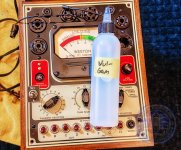
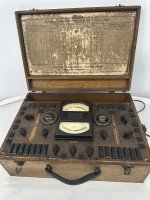
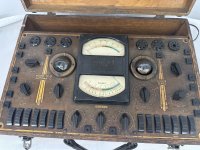
Super cute! If a tube tester can be cute...Lookie here what I scored today and is on its way to me - a 1930 Supreme Model 19 tube tester!

Super cute! If a tube tester can be cute...Lookie here what I scored today and is on its way to me - a 1930 Supreme Model 19 tube tester!

Super cute! If a tube tester can be cute...

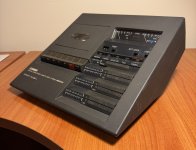
Make sure to clean the record/play switch! Best to do that with spray Deoxit in the green and black can. It leaves a non-volatile lubricant behind which is vital for the switch to work after cleaning.This is my latest project. Yamaha TC-800 GL. Circa 1975. This completes my MOMA (Museum
of Modern Art) audio collection. The other piece is a B&O 4002 Turntable.
Are there any other pieces of HiFi gear in their permanent collection? They have a Dieter Rams designed Braun radio that is awesome, but not really HiFi.
The casework on this one is in decent shape. Some minor wear and scuffs I will need to figure out how to clean up. The surface is textured so I am being super careful.
Any thought or ideas are welcome.
New belts will arrive next week. The disassembly and cleanup begins today.
View attachment 36089
This is my latest project. Yamaha TC-800 GL. Circa 1975. This completes my MOMA (Museum
of Modern Art) audio collection. The other piece is a B&O 4002 Turntable.
Are there any other pieces of HiFi gear in their permanent collection? They have a Dieter Rams designed Braun radio that is awesome, but not really HiFi.
The casework on this one is in decent shape. Some minor wear and scuffs I will need to figure out how to clean up. The surface is textured so I am being super careful.
Any thought or ideas are welcome.
New belts will arrive next week. The disassembly and cleanup begins today.
View attachment 36089
Thanks Ralph. I have several types of De-Oxit and will go through all the switches and faders. This deck has all linear faders which are notoriously noisy.Make sure to clean the record/play switch! Best to do that with spray Deoxit in the green and black can. It leaves a non-volatile lubricant behind which is vital for the switch to work after cleaning.
Thanks Michael,I have dozens of hours of experimenting with cleaning up every kind of metal, plastic, bakelite, glass and more you can think of on over 30 vintage pieces.
I've also studied a bit of the chemistry of what makes different cleaners work on different materials since the vintage stuff is so delicate compared to the newer stuff. Thankfully 70's is considered 'new' so you have more options to choose from.
We need to determine what is the dirt on the unit: smoke? Grease? Human oils? Other?
My guess is looking at it you are dealing mostly with dirts and human oils which is much easier to clean. Also the unit probably never runs hot so that helps keep the dirt from being "baked in" over time.
FIRST - take a soft brush and dust the unit getting off any big dirt particles.
Then ob the side near the bottom take a slightly damp paper towel with only a bit of water. LIGHTLY wipe once or twice and then dry and see what it looks like. If you wipe to hard you will scratch it. Being textured that rules out using any polishes.
If you can sent me a before and after I can help narrow down what cleaners you should use.
Thanks Michael,
So far I have used water with a drop of Dawn and microfiber towels to clean the surfaces. I have to take the deck completely apart to change the belts so I’ll be able to fully wet all the surfaces with the casework off. So far it’s mostly just dirt and finger oils and that is coming off nicely. There are some shiny areas on the back. It could be the coating worn off or something on it that doesn’t appear to be water soluble. I think it’s the latter as I can use a fingernail to remove some of it. The good news is that there is a lot of area on the bottom of the deck that will never be visible, so I can experiment with cleaners there.
I have a cammed-out JIS head case screw so I’m working on that right now. Patience, grasshopper. This is fun.
The Casework is textured plastic. It’s a medium gray. The texture is moderate and ‘pebble like’ and gives the surfaces a nice hand feel. IDK if it was an in-mold deco or sprayed on after. Hard to say.OK - great info.
And yes - this is the fun part for sure.
I already have an idea what will work great for you but to double confirm - is the casework textured plastic or metal?

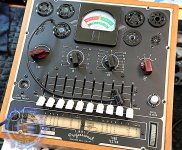
Michael - that is an amazing restoration. Well done!
Thanks for the great recommendations. I’ll order them today.
These 50 year old decks are moderately scarce and this is the best physical example I’ve found to date.
Most of them are pretty beat up or have deep scratches that I don’t know how to repair.
My goal is to get it as good looking as possible without screwing it up.
I can fix the electronics and the transport looks to be on great shape with no visible wear.
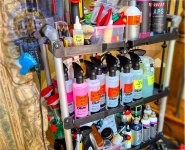
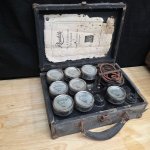
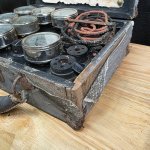
Those look like some real challenges. Are you going to replace the Tolex on the second one or try and restore it?
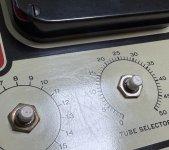
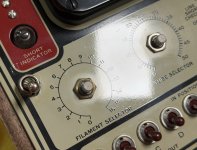
There will be a lot of electrolytic capacitors to replace! These days anyone working on electronics from the 1970s should expect to replace every one in sight. I do not use tantalum capacitors; if I find them I replace them with good quality electrolytics. Tantalum caps had a way of shorting back in the old days (1970s) and still do.I can fix the electronics and the transport looks to be on great shape with no visible wear.
Dang! That looks amazing.Showing what using the right polish can do - before and after removing scratches:
View attachment 36107
View attachment 36108