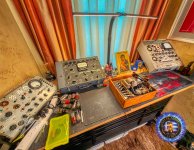
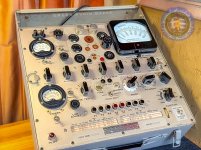
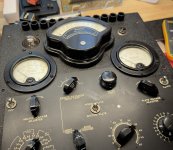
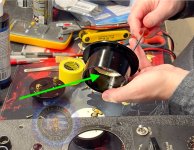
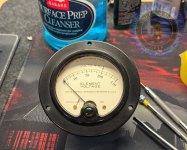
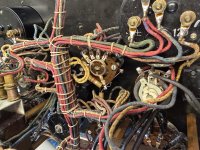
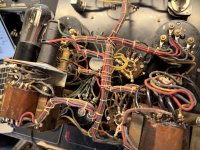
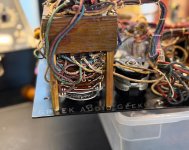
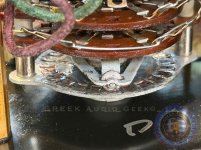
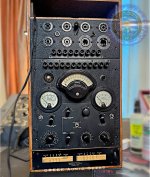
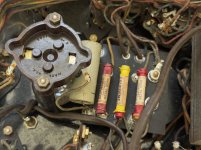
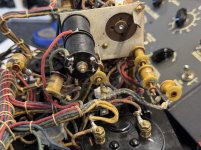
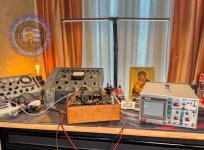
Picture of the latest addition - a fully restored Western Electric 15750-L2 tube tester.
What is a WE tester?
Most people assume the Hickok 539C and the Western Electric 15750 are basically the same tube tester. Same DNA, different label — right?
Not quite.
I find the differences very interesting. But then I'm a total tube geek.
The 539C is a fantastic all-around tester. Flexible, easy to use, and capable of testing a huge range of tube types. If you're building a general-purpose bench, it's hard to beat.
But the 15750 wasn't designed for general purpose. It was built specifically for Western Electric — not the consumer market — and it was engineered around one particularly demanding family of tubes: DHTs. Direct Heated Triodes. Think 45, 2A3, and 300B.
Why does that matter?
DHT tubes are unusually sensitive to test conditions. They don't just need a voltage applied and a reading taken. They're highly dependent on three things:
- Filament stability — the heated cathode must reach a consistent operating temperature
- Bias consistency — the grid voltage must be precise and stable
- Operating point — the combination of voltages must reflect real-world conditions
Most testers approximate these conditions. The 15750 was designed to
control them.
Here's how it does that technically:
The 539C uses AC-derived bias — meaning the bias voltage shares a common source with other voltages in the circuit. That creates subtle interactions that can affect readings, especially on sensitive tubes.
The 15750 uses filtered DC bias — a cleaner, more isolated source that produces more stable operating points during the test. Less interaction between voltages means more consistent, repeatable results from tube to tube.
On top of that, Western Electric specified hand-trimmed resistances and individually calibrated values during production. This wasn't off-the-shelf assembly. Each unit was built to hit specific electrical targets — something that simply wasn't done on consumer-grade Hickok builds.
So what does all this mean practically?
If you're testing a mixed bag of receiving tubes — 12AX7s, 6L6s, EL34s — the 539C is the better tool. It's faster, more versatile, and perfectly accurate for the job.
But if you're dealing with 45's, 2A3;, 300B's like I often am and where consistency really matters, the 15750 gives you something the 539C simply can't: repeatable, system-level results under controlled conditions.
It's not that one is universally better than the other. It's that they were built for different jobs — and knowing the difference helps you use both correctly.
Right tool. Right context. Better results.