
Michaels HiFi
Well-known member
- Thread Author
- #81
Here are before and after my complete stripping, cleaning, sanding and restoration of a 90 year old tube tester case for a comparison point to my above posted photo.
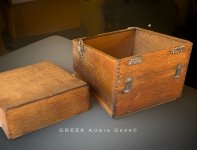
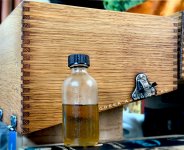


I hope you get to testing some vintage tubes in that soon...Here are before and after my complete stripping, cleaning, sanding and restoration of a 90 year old tube tester case for a comparison point to my above posted photo.
Thanks Ralph. I'm going to be replacing the main capacitor in it this weekend and go from there. I have a beautiful pair of 1945 National Union in original box type 45 tubes on their way to me. I'd love to be able to test them in it.I hope you get to testing some vintage tubes in that soon...
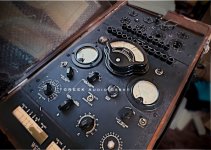
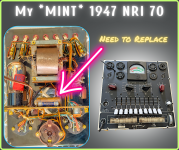
Make sure you get those connections right!Thanks Ralph. I'm going to be replacing the main capacitor in it this weekend and go from there. I have a beautiful pair of 1945 National Union in original box type 45 tubes on their way to me. I'd love to be able to test them in it.
I'm waiting to get this beauty back. I currently have a friend who is an amp builder trying to bring it back to life. It's unique in that the top part is completely isolated from the bottom half which means you set it for the right tube using manual patch cords.
This one took 25+ hours just to strip of the almost 85 years of military grade lacquer being brushed on year after year. I've got the wood case ready to go for when I get the unit back (hopefully working). It's 2.5 feet tall.
View attachment 35021
This is a case where just putting in a competent film cap, but nothing exotic, will work great, like these.It works great, but I'm going to be replacing the giant cap with a new one. At 78 years old it's probably safe to say it needs to be updated.
Thanks for the link.Make sure you get those connections right!
Before you start testing tubes from the wild, test a few known good ones so you know if the tester is working.
This is a case where just putting in a competent film cap, but nothing exotic, will work great, like these.
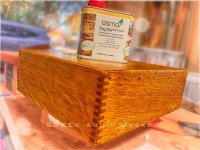
You are putting quite a lot more time into the idea of the finish than the OEM did, that's for sure. They likely just built it to be practical. Most of the prewar test equipment I've seen has had a darker finish, but that might well be simply because of the age rather than the original appearance.I've still got 7 more wood finishes to try, however on this one I'm trying Osmo Matte.
I previously tried Osmo and didn't really care for the look. However this time I'm trying the matte finish as I've changed in the last few month from like a more glossy look to instead preferring a more matte / flat finish so it looks like a nice aged piece rather than a museum piece (with the gloss) BUT it still needs to highlight the grain nicely.
My hypothesis is that it will give a similar look to my personal favorite tri-blend of products I mixed up that is beautiful, though Osmo won't be quite as much perceived depth in the grain. This one step product will be an easier mix to use rather than always having to mix up my concoction.
Here it is still wet after coat one.
View attachment 35039
Hey Ralph - yeah many of the ones I've received so far are usually white oak with oil yellow lacquer finish. The lacquer has heavily ambered over the 90 years along with embedded grime. Part of the way to tell their original color is when I take them out of the case I can see the original color (or a cleaner version of the original color) on the inside. A simple lacquer finish over white oak would have kept the wood relatively light in color.You are putting quite a lot more time into the idea of the finish than the OEM did, that's for sure. They likely just built it to be practical. Most of the prewar test equipment I've seen has had a darker finish, but that might well be simply because of the age rather than the original appearance.
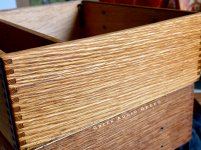


That's very nice work, and beautiful boxes, worth the time to take care of them.
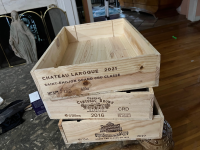
I just got three cheapie wine boxes to hold my overflowing stacks of CDs, but I don't think I'll refinish them. Eh, maybe for the hell of it someday (if I get a round tuit). I need one of those..
View attachment 35056
View attachment 35057
Well, they're inexpensive pine boxes, so maybe I'll give it try - in my spare timeThose are great looking boxes. You could have fun trying different finishes on those!


Better than new Michael!Top is restored after 25++ hours of work.
Bottom photo is as received on this 1940 tube tester.
View attachment 34704
View attachment 34705
Thanks! It's been a lot of fun through trial and error and learning as I go along.Better than new Michael!
As long as you’re having fun, that’s really all that matters in the end.Thanks! It's been a lot of fun through trial and error and learning as I go along.
Hey Michael, just wondering how long before you do an in depth assessment of the Alan Eaton type 45 SET amps, you mentioned about doing it months ago and I’m patiently waiting all that time. I’m sure others are waiting also. Hate to say I can’t wait, but I can’t wait!Thanks! It's been a lot of fun through trial and error and learning as I go along.
Review on the stereo 45 hopefully next week. The mono block 45's are currently burning in. Lockwood speakers just finished burn in and I moved them to the main room today.Hey Michael, just wondering how long before you do an in depth assessment of the Alan Eaton type 45 SET amps, you mentioned about doing it months ago and I’m patiently waiting all that time. I’m sure others are waiting also. Hate to say I can’t wait, but I can’t wait!
The Lockwood looks like an excellent speaker but if you want to hear what the 45s really do you'll want a speaker about 10dB more efficient. The one in the photo you just put up is good to 30Hz. You if your plan is to use this speaker with the 45s, you might consider putting a small capacitor in series with the input to limit bass below 30Hz. I can work the math out for you if interested; if the amp's input impedance is 100K, the cap needed would be about 0.05uf or slightly larger.Review on the stereo 45 hopefully next week. The mono block 45's are currently burning in. Lockwood speakers just finished burn in and I moved them to the main room today.
Hi Ralph - great info. Thanks for sharing.The Lockwood looks like an excellent speaker but if you want to hear what the 45s really do you'll want a speaker about 10dB more efficient. The one in the photo you just put up is good to 30Hz. You if your plan is to use this speaker with the 45s, you might consider putting a small capacitor in series with the input to limit bass below 30Hz. I can work the math out for you if interested; if the amp's input impedance is 100K, the cap needed would be about 0.05uf or slightly larger.
Its obvious from the sheer size of the output transformers in the 45s that they use a gapped output transformer (so are not a parafeed circuit). The size is so large (what you might expect to see in a 15 Watt PP amp) because gapped transformers lose their inductance at low frequencies. This causes the impedance of the transformer at those frequencies to drop dramatically, which puts an excessive load on the power tube (IOW, hard on the tube, not a good thing to do to an expensive or rare DHT).
The 'gap' is required to prevent the DC current flowing thru the transformer from turning the transformer into a magnet and thus saturating the core- so this move vastly reduces distortion.
The larger size of the output transformer is an attempt to get around this problem. The good news, the reason why type 45 SETs are often the best sounding SETs, is that the larger transformer isn't so large that you don't get good high frequency bandwidth; I'd not be surprised if it has bandwidth past 100KHz. That reduces high frequency phase shift quite a lot. The ear perceives phase shift as a tonal coloration and it can affect the presentation of the sound stage. So I expect to hear good things about this amp in that regard.