My retreat from a streamer to a basic preamp

Feanor

Active member
Joined
Apr 9, 2014
Messages
402
Location
Southern Ontario
I tried an Eversolo DMP-A6 streamer which worked as advertised and sounded fine. My conclusion is that if I were to subscribe from streaming service -- which I'm not a present -- I try the service's browser or Windows app before resorting to a streamer device.

So I'm back to my Foobar2000 on my Windows 11 computer running Equalizer APO applying FIR filters created by Gsonic. My PC feeds my one or the other of my preamps. (See my post on FIR filters, EqAPO, and Gsoni HERE.)
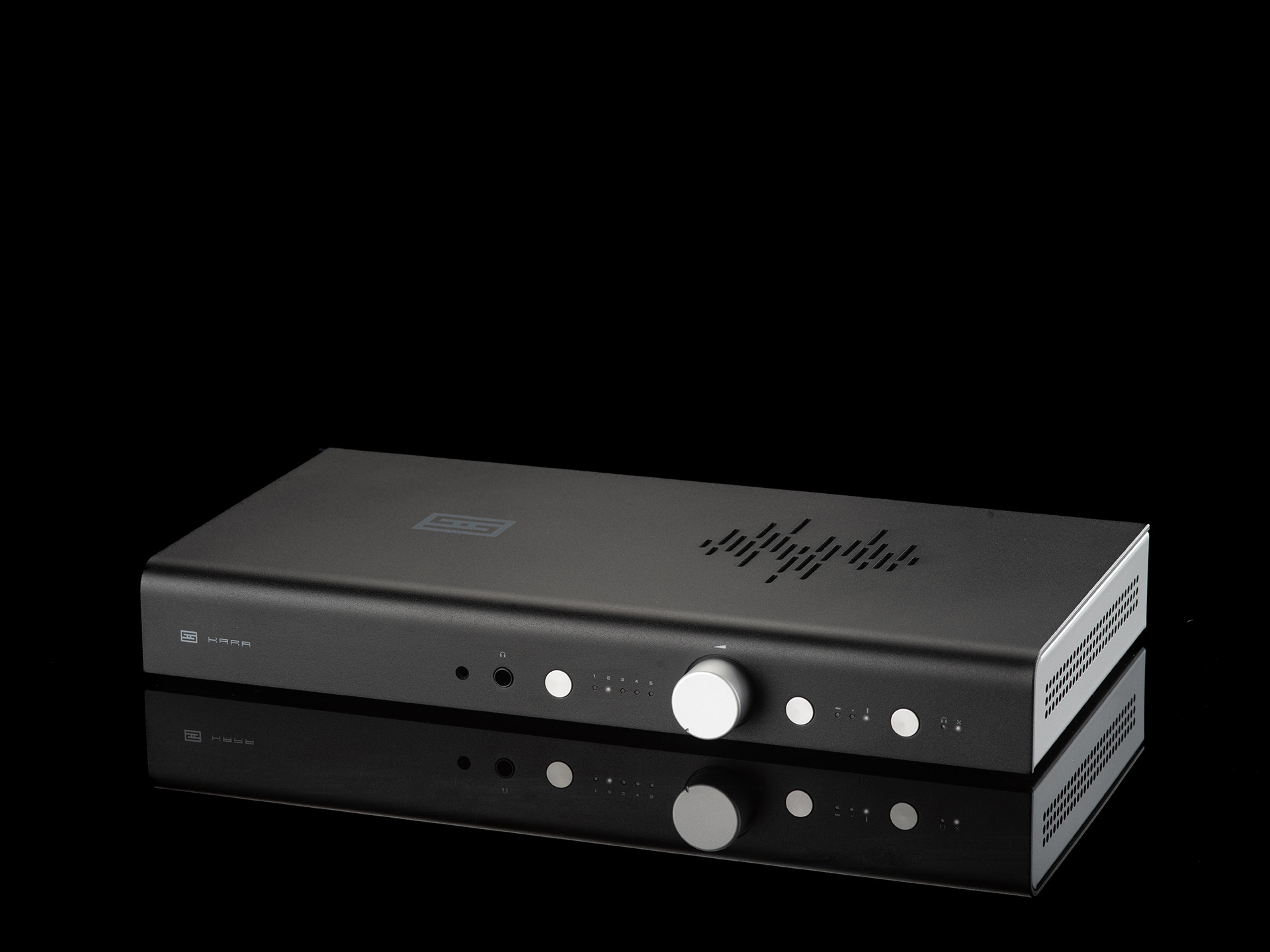
  • My latest preamp is a Schiit Kara F with the 'Forkbeard' remote control via the Android version of the Schiit app.
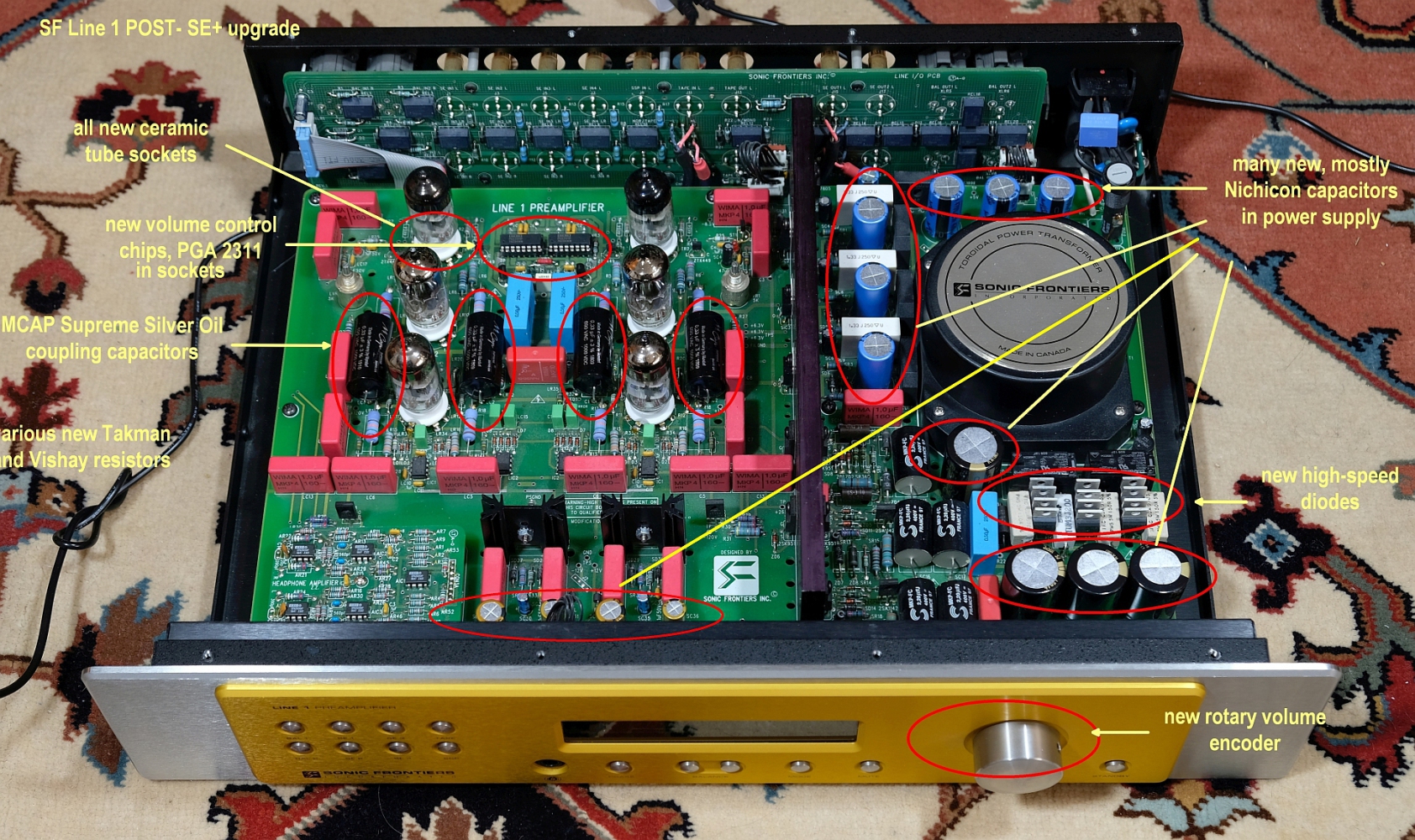
  • However I expect to alternate with my Sonic Frontiers Line 1 tube preamp with "SE+" upgrades by Parts ConneXion.

kara-front-blk-1920.jpg


356
gi.mpl
 
Last edited:
There are many ways to achieve the preferred sound from a system. For me, the use of a nice, tubed, pre-amp fills most of my needs.

Figuring out what you actually like, and getting your system to produce that, despite all the industry, and interweb, static, and be a challenge.

That is. Nice looking pre-amp, with some quality part improvements.
 
There are many ways to achieve the preferred sound from a system. For me, the use of a nice, tubed, pre-amp fills most of my needs.

Figuring out what you actually like, and getting your system to produce that, despite all the industry, and interweb, static, and be a challenge.

That is. Nice looking pre-amp, with some quality part improvements.

Tubes are the magic Elixir of life.
 
Tubes are the magic Elixir of life.
Well perhaps, but what I like about my Sonic Frontiers Line 1 is that it is a good deal less "tubey" than most tube preamps. So for a minor example, the SF Line 1 has a good deal more detail and transparency than the Schiit Freya I briefly owned a couple of years ago.
 
Well perhaps, but what I like about my Sonic Frontiers Line 1 is that it is a good deal less "tubey" than most tube preamps. So for a minor example, the SF Line 1 has a good deal more detail and transparency than the Schiit Freya I briefly owned a couple of years ago.
And that's what makes this hobby so great - we can all enjoy different sounds.
 
So for a minor example, the SF Line 1 has a good deal more detail and transparency than the Schiit Freya I briefly owned a couple of years ago.
I’d expect that, actually. Unless I’m completely mistaken, the SF was a quite a bit more expensive than the Freya.

At this point, I’ve owned five tube preamps, and two tube power amps. All of them sounded different. Most of the time, I’ve found it to my advantage to have tubes somewhere in the system, but not always. In any case, anything that sounded syrupy would be gone pretty quickly.

A well focused and transparent sonic hologram with good transient attack is my goal (i.e. it sounds “real”), so any component that moves me closer to that kind of realistic presentation stays. The stuff that doesn’t moves on. Interestingly, there have been things I’ve sold to others who have told me afterwards that the component I sold to them did exactly that for them when it didn’t work well in my rig. Different strokes or different factors at work in the system? Who knows. It would be pretty boring if everyone liked the same stuff.
 
I’d expect that, actually. Unless I’m completely mistaken, the SF was a quite a bit more expensive than the Freya.

At this point, I’ve owned five tube preamps, and two tube power amps. All of them sounded different. Most of the time, I’ve found it to my advantage to have tubes somewhere in the system, but not always. In any case, anything that sounded syrupy would be gone pretty quickly.

A well focused and transparent sonic hologram with good transient attack is my goal (i.e. it sounds “real”), so any component that moves me closer to that kind of realistic presentation stays. The stuff that doesn’t moves on. Interestingly, there have been things I’ve sold to others who have told me afterwards that the component I sold to them did exactly that for them when it didn’t work well in my rig. Different strokes or different factors at work in the system? Who knows. It would be pretty boring if everyone liked the same stuff.

Well yes, the Sonic Frontiers LIne 1 when out of production circa 2000 at a price of at least US$3000 which would be close to $6000 today, so much more expensive than the $800 Kara F.

But the Used market for SF models in general has been slim. Sonic Frontiers were distained by my many tube fans for not being "tubey" enough. I've owned TWO SF LIne 1's; the first around 2011 that I sold 2-3 years later, (unfortunately), the second abou 2021 which is the one I have now. IN BOTH CASES I paid US$900 -- a bargain both times. About 4 years ago I had Parts ConneXion upgrade the 2nd to "SE+" status; this upgrade was worth about US$1100, (in itself more than a Kara).

I've had 3 tube preamps and only really like the SF Line 1 which has near solid-state detail & transparency but still a little tube warmth.
 
A friend of mine had that preamp. It was a good sounding unit as I recall, especially after I talked him into horizontally biamping those stratus golds instead of bridging the 4B SSTs.. 😳
 
I've finding that the Schiit Kara F is doing a good, a very clean and transparent sound.

However I should mention that I'm using the Kara in its High-gain mode, whereas I'd sort of hoped to use Passive mode. This is entirely because I'm using Equalizer APO with Gsonic created FIR convolution filters. These filter files seem to soak up at least 6 dB of gain.

The good news, as previously reported, is using the FIR filters has very salutary effect on the sound quality, IMHO. (For me at least), imaging and soundstage are improved and the presentation is more palpable. Come to that, a much great improvement than anything the Schitt Kara is doing
 
I confess to being puzzled as to why you would use a streamer with variable output in the preamp function when you have a piece like the SF Line 1 SE. i ran the output of my Directstream directly into the amp for a while, but it was a matter of necessity. When I was able to put the preamp back in I had a sigh of relief. Why not just run the digital output from the Eversolo into your dac?
 
I confess to being puzzled as to why you would use a streamer with variable output in the preamp function when you have a piece like the SF Line 1 SE. i ran the output of my Directstream directly into the amp for a while, but it was a matter of necessity. When I was able to put the preamp back in I had a sigh of relief. Why not just run the digital output from the Eversolo into your dac?
In my case ran my power amp from the Eversolo dispensing with a preamp. However I wanted to continue to run Foobar2000 on my Win computer because I like Foobar's browse to access my NAS-based music library. I wanted to use USB to send Foobar output from computer to the Eversolo.

USB to Eversolo works but one is unable to use Eversolo's room correction or equalizer capabilities; these only work with Eversolo's own internal player -- this was the lack of functionality I alluded to.

As of today I'm using Equalizer APO on my Win computer with FIR convolution files created using Gsonic to provide room correction and equalizer.
 
In my case ran my power amp from the Eversolo dispensing with a preamp. However I wanted to continue to run Foobar2000 on my Win computer because I like Foobar's browse to access my NAS-based music library. I wanted to use USB to send Foobar output from computer to the Eversolo.

USB to Eversolo works but one is unable to use Eversolo's room correction or equalizer capabilities; these only work with Eversolo's own internal player -- this was the lack of functionality I alluded to.

As of today I'm using Equalizer APO on my Win computer with FIR convolution files created using Gsonic to provide room correction and equalizer.
You had to know that you’d pay a sonic penalty by taking the SF preamp out of the system. All I can figure is that you felt the ability to use the Eversolo room correction capability was of enough benefit to override that loss.
 
You had to know that you’d pay a sonic penalty by taking the SF preamp out of the system. All I can figure is that you felt the ability to use the Eversolo room correction capability was of enough benefit to override that loss.
Sonic penalty? Well a sonic difference to be sure.

I love my Sonic Frontiers Line 1 and will swap it back into my setup from time to time. The Line 1 produces a slightly warmer, smoother sound than ultra-low distortion components but with the loss of some detail and, maybe, a very small amount of grain. Per se the Line 1 is relatively very low distortion for tube preamp, certainly lower than the couple of other tupe pres I've owned

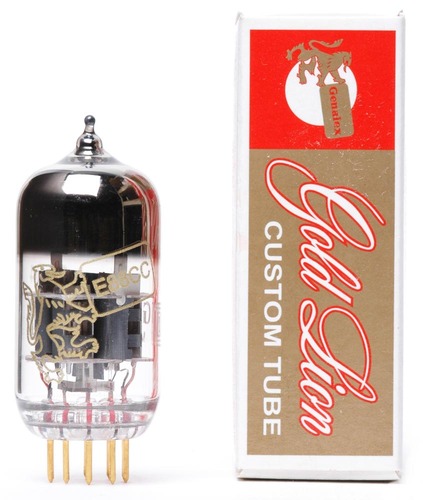
FWIW, I've rolled tube in the Line 1 and there were differences amongst tube, definitely between the most extreme instances. Presently I have Genalex Gold Lion E88CC/6922installed at the gain stage that sound very nice.

GL-E88CC-2.jpg
 
Wow. Your experience is so alien to my own that it’s a little hard to get my mind around it. If my Von Gaylord preamp added any grain whatsoever I wouldn’t have it in the system.

The VG is a two-chassis setup utilizing a 6SN7 family tube for each channel backed up by a 25 lb. power supply. I’m currently running a pair of Raytheon 6SN7GT tubes that I got from Michael’s HiFi (Thanks, Michael!) When I have it in the system, I get more of everything - it’s more holographic, more and better bass, more detailing. Depth, breadth, and precision of the performers’ locations in space are all improved. For lack of a better descriptor, it just sounds more real. The Directstream is no slouch, but the improvement in bass especially is very noticeable with the preamp in the system.

What this exchange has proven to me yet again is that everything is system dependent. There seems to be few absolutes in this hobby beyond a dead short is a bad thing.
 
Wow. Your experience is so alien to my own that it’s a little hard to get my mind around it. If my Von Gaylord preamp added any grain whatsoever I wouldn’t have it in the system.

The VG is a two-chassis setup utilizing a 6SN7 family tube for each channel backed up by a 25 lb. power supply. I’m currently running a pair of Raytheon 6SN7GT tubes that I got from Michael’s HiFi (Thanks, Michael!) When I have it in the system, I get more of everything - it’s more holographic, more and better bass, more detailing. Depth, breadth, and precision of the performers’ locations in space are all improved. For lack of a better descriptor, it just sounds more real. The Directstream is no slouch, but the improvement in bass especially is very noticeable with the preamp in the system.

What this exchange has proven to me yet again is that everything is system dependent. There seems to be few absolutes in this hobby beyond a dead short is a bad thing.

I have no experience with very high-end components such as the Von Gaylord UniPre so I'm unqualified to comment on the improvement such a component might make.

The sound I hope to achieve is the raw, unmodified sound of the recording itself. The first & fundamental problem is that some (many) recordings just aren't that good. Personally I'm willing to hear the less good recordings sounding a bit raunchy provided the best recordings are sounding their best. The second consideration is that some listeners prefer a sound that's modified in some way, typically warmer, smoother, and perhaps with some of the tube holographic effect; this is subjective choice needless to say.

For my part, to reiterate, the greatest improvement I've heard in my system in years is the result of applying a FIR convolution filter to tune room effects and speaker time domain issues. The effect of this type of filtering in my experience so far is to improve imaging and soundstage depth and palpability; it doesn't change sound tone.
 
The sound I hope to achieve is the raw, unmodified sound of the recording itself. The first & fundamental problem is that some (many) recordings just aren't that good.
It would be hard to argue that. In any case, we’re pursuing very different goals, which is fine and explains much.

Some years ago, I gave up on trying to analyze my rig’s performance in any given area, including its ability to recreate the “raw, unmodified sound of the recording itself”. I don’t believe that I know what that is with any certainty.

Instead, I use kind of a variation on Plato’s Forms. (Huh??!?)

Imagine a performance by whatever artist you find great pleasure in listening to, but in this performance everything is perfect. Every person involved is highly competent and conscientious in the performance of their tasks. The acoustics of the venue are flawless, as are the microphones and recording equipment used. What would that sound like?

Obviously, no such performance exists (Plato’s Forms again) but I find the concept useful in evaluating a piece of equipment over time. As I listen to different artists, does that piece move me closer to experience of that mythical performance or away from it? If it moves me closer it stays, if not it’s gone.

For me, it seems to work.
 
It would be hard to argue that. In any case, we’re pursuing very different goals, which is fine and explains much.

Some years ago, I gave up on trying to analyze my rig’s performance in any given area, including its ability to recreate the “raw, unmodified sound of the recording itself”. I don’t believe that I know what that is with any certainty.

I don't think there is a whole lot mystical about it.

Q: What is a good recording in terms of sound quality?

A: It is a recording that consistently sounds good to me regardless of the equipment on which it is played.

Q: What equipment reproduces a good recording closest to the inherent potential of that recording?

A: The equipment that reproduces good recordings with maximum detail & transparency, with maximally crisp, clean dynamics, and deep, articulate bass.
 
Back
Top