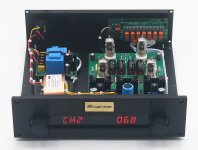
My next preamp: Cary SPL-90 CLONE

Here is a question for the Clone Crowd. If it was just another pc of Chi-Fi and they did not mention it was a clone of a well known brand, would you still buy it? Or are you relaying on the Brand Name that was cloned to make you think it will be just as good?


Now that is a good question I hadn't thought of. Would someone buy a $700 XYZ preamp, maybe, especially if there were some good reviews from users. Using an established name to sell off of would seem to be an advantage though.
 
Now that is a good question I hadn't thought of. Would someone buy a $700 XYZ preamp, maybe, especially if there were some good reviews from users. Using an established name to sell off of would seem to be an advantage though.

It was a great question for sure. I think many of them love pretending they are getting something "just as good" or "almost as good" (which we all know it's not) for a lot less.

I think it is that psychological need that makes them fall victim to their own confirmation bias they accuse us of into thinking their fake gear sounds better than it really does.
 
Now that is a good question I hadn't thought of. Would someone buy a $700 XYZ preamp, maybe, especially if there were some good reviews from users. Using an established name to sell off of would seem to be an advantage though.

Many "clones" are reviewed. Above I referred to a guy who reviews lots of them, HiFi Zone on YouTube. I've bought a couple of clones based on his reviews and they were well-constructed and sound pretty good. Would I buy a cheap non-clone based on a good review? Maybe.

Do you think I thought they were just as good as the original? Not necessarily; certainly the clones might have be as well made, or have the same quality parts, or PCBs as well laid out, nor, for that matter, are they necessarily completely true to the originals designs. One thing is for sure: they are tremendously cheaper -- so if not "just as good" perhaps better value nevertheless.
 
One problem I previously noted is the marketing use of a respected hi end manufacturer to sell. a clone. It obviously exists and the original manufacturer receives no benefit or compensation from its brand name use. Same issue exists in music. Royalty fees and compensation is entirely justified.
 
One problem I previously noted is the marketing use of a respected hi end manufacturer to sell. a clone. It obviously exists and the original manufacturer receives no benefit or compensation from its brand name use. Same issue exists in music. Royalty fees and compensation is entirely justified.

The other reality: many of the clones are clones in looks but then use typical crap parts. What's the point in buying that?
 
Do you think I thought they were just as good as the original? Not necessarily; certainly the clones might have be as well made, or have the same quality parts, or PCBs as well laid out, nor, for that matter, are they necessarily completely true to the originals designs. One thing is for sure: they are tremendously cheaper -- so if not "just as good" perhaps better value nevertheless.

Further this, it's worth mentioning that an important way clone makers achieve low cost is the use of standardized, mass-produced components. Obviously everybody uses mass produced resistors, capacitors, transformers, relays, etc., but clone makers use mass produced cases and assembled components such as ALPS potentiometers (obviously), and resistor ladder volume controls, and remote control hand units.

The case, display, remote selector mechanism and resistor volume control used on the "SLP-90" I bought are all used on maybe a dozen other "clones". The cases are amazingly solid and uses heavy, solid aluminum. In this case the PCB is made by reputable "clone" PCB board makers, Zero Zone, whose boards are used by many assemblers. (There is a considerable similarity to the generic PC assemblers.) The unit I received seems to be meticulously assembled.

Clipboard_08-03-2026_05.jpg
 
Last edited:
Can you share your ASR measurements with us to prove "Chorus voices unexpected stood out distinctly, and *more expectedly) solos had charming warmth and lustere" and it wasn't just more of your expectation bias?

Still waiting for ASR measurements to support the claims of the SQ - especially since there was no DBT used. :).

Funny how they don't practice what they demand of us, isn't it?

Oh....and he forgot to mention the other ways they achieve lower costs - IP theft, product espionage, and slave labor.
 
They are profiting off another manufacturer's brand / reputation. That is theft pure and simple. Otherwise, why would they market the clone in the manner they do. Why don't they name it something with no ties to the hi end market? If it had a different, unrelated name, would the OP have bought the product? IMO, slim to none. What raised his initial interest regarding this clone?

I previously posted why this is a financial rip off to hi end manufacturers, which is a very unique, small volume, small market industry. Please explain the purpose of a thread dedicated to hi end manufacturer brand / reputations intellectual robbery other than espousing the ASR rant and dogma against hi end gear pricing which most consumers recognize (and agree) is off the rails with certain manufacturers? WHY?
 
Last edited:
By now I have a good many hours listening to the "pseudo" SLP-90. I have listened to it paired with the "clone" TransAudio 'D5' amplifier discussed in another thread. I am very please with the result with the important caveat that I recognized that this tube device, like other tube devices, delivers pleasant distortion to the sonic presentation.

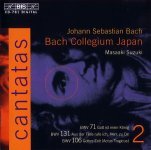
I particular I was surprised and delighted with the SPL-90's presentation,(in particular paired with my Purifi amp), of J.S. Bach's cantatas as recorded both by Masaaki Suzuki and Eliot Gardner. These clearly display the preamp's slightly forward but mellow, lustrous midrange. Both solo chorus voices benefit. In fact, chorus voices are more distinct and separated than with my ultra-low distortion Schiit Kara.

I might mention that I connected the SPL-90 to the Purify using an RCA to XLR converter like THIS one. It uses a purpose-made DRV134PA chip to create a balanced, differential signal from single-end input. As far as I can hear the converter is completely transparent.

folder.jpg
 
Last edited:
By now I have a good many hours listening to the "pseudo" SLP-90. I have listened to it paired with the "clone" TransAudio 'D5' amplifier discussed in another thread. I am very please with the result with the important caveat that I recognized that this tube device, like other tube devices, delivers pleasant distortion to the sonic presentation.

I particular I was surprised and delighted with the SPL-90's presentation,(in particular paired with my Purifi amp), of J.S. Bach's cantatas as recorded both by Masaaki Suzuki and Eliot Gardner. These clearly display the preamp's slightly forward but mellow, lustrous midrange. Both solo chorus voices benefit. In fact, chorus voices are more distinct and separated than with my ultra-low distortion Schiit Kara.

I might mention that I connected the SPL-90 to the Purify using an RCA to XLR converter like THIS one. It uses a purpose-made DRV134PA chip to create a balanced, differential signal from single-end input. As far as I can hear the converter is completely transparent.

View attachment 36119

of course you are.... yawn
 
I think the larger issue is in this instance it may be an old design, but honestly recognizing the massive scale of IP theft organized by the Chinese government in every single industry and those who pretend it's not how their government works.

I worked with Chinese companies for 25 years. The scale of IP theft and industrial espionage is on a level unmatched by any other country in the world.
Here is what I don’t understand - it seems pretty clearly to be trademark infringement, and the likelihood of successfully addressing it in China seems nil, but why are these products even allowed into countries where protections against this kind of blatant IP theft exist? As I think @ggdudeabides pointed out, it’s unlikely anyone would give these things a second glance were they not clearly identified as being copies of well-respected and patented products. The patents may have expired, but the trademarks haven’t as far as I know.
 
Last edited:
Here is what I don’t understand - it seems pretty clearly to be trademark infringement, and the likelihood of successfully addressing it in China seems nil, but why are these products even allowed into countries where protections against this kind of blatant IP theft exist? As I think @ggdudeabides pointed out, it’s unlikely anyone would give these things a second glance were they not clearly identified as being copies of well-respected and patented products. The patents may have expired, but the trademarks haven’t as far as I know.

Great question.

I think where these shady companies don't have actual businesses in the US - they operate out of China it helps bypass it.

For instance I'm sure on Feanor's import bill it didn't say "clone of possibly trademarked products". It probably just said "audio amplifier".

So unless these small companies went to trade court in countries like the US and Canada to ask for an important ban, it's unlikely to ever happen on its own.

Even if that did happen, I'm sure the theft-enablers buying products that were ruled troublesome would still find away around the bans.
 
Back
Top