

Michaels HiFi
Well-known member
- Thread Author
- #1
Guys… after what can only be described as an absurd, borderline-unhealthy number of attempts, I have finally cracked the code.
This strange Bakelite/plastic-like finish shows up on some vintage gear from the 1920s and 1930's, and for the longest time has been my personal restoration nemesis. I tried everything. And when I say everything, I mean 40+ products and easily 100+ individual attempts. Polishes, waxes, glazes, quick detailers, compounds, dressings… nothing. Absolutely nothing. It would sit there, nearly a century old, looking tired and completely unimpressed by every modern miracle product I threw at it.
And I swear I could hear it whispering to me....mocking me...daring me to try again.
I was perplexed. I was humbled. Dare I say I was befuddled? I may have even stared at it in silence a few times like it had personally insulted my family. But I refused to concede defeat. I knew one day it would yield to my iron will.
Eventually I stopped asking, “What product haven’t I tried?” and started looking to better understand the material.
And that is when the completely ridiculous idea hit me:
What if I started treating this plastic like..... WOOD?
Yes. Wood.
So naturally, because apparently I enjoy making simple things difficult, I went charging down an entirely new obsessive hole. Polyurethanes. Lacquers. Different shellacs. Different application methods. Different amounts. Different cure times. Most were awful. Some a nit less than awful. None were right.
And then, one glorious day, I tried an oil from Sweden.
And the heavens opened.
The clouds parted.
Somewhere, a tiny vacuum tube began glowing in approval.
THE UNTAMABLE BEAST HAD FINALLY BEEN DEFEATED.
I don't want this piece to look new. That would destroy the point. It has nearly 100 years of history, character, scars, and patina, and I wanted all of that to remain. I simply wanted it to look a little less tired… a little richer… a little more dignified after surviving almost a century.
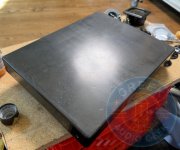
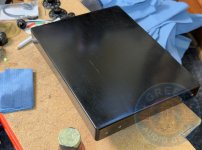
And here, my friends, are the before and after photos.
Just as important as the product, though, was the application. I’m using a hard, dense shop rag that absorbs very little, putting only a tiny amount of product on it, and then really working an extremely light coat into the finish. No flooding. No heavy coating. No trying to bury the history under a shiny new surface.
Just enough to wake it back up.
So after 40+ products, 100+ attempts, multiple moments of questioning my own sanity, and one bottle of mysterious Swedish oil…
I AM VICTORIOUS.
Ancient Bakelite Beast: 0
OCD nut job: 1
For now.

PS. I've started long-form writing like this in a media-rich format. You can read more - all FREE - here: https://greekaudiogeek.substack.com/
This strange Bakelite/plastic-like finish shows up on some vintage gear from the 1920s and 1930's, and for the longest time has been my personal restoration nemesis. I tried everything. And when I say everything, I mean 40+ products and easily 100+ individual attempts. Polishes, waxes, glazes, quick detailers, compounds, dressings… nothing. Absolutely nothing. It would sit there, nearly a century old, looking tired and completely unimpressed by every modern miracle product I threw at it.
And I swear I could hear it whispering to me....mocking me...daring me to try again.
I was perplexed. I was humbled. Dare I say I was befuddled? I may have even stared at it in silence a few times like it had personally insulted my family.
But I refused to concede defeat. I knew one day it would yield to my iron will.Eventually I stopped asking, “What product haven’t I tried?” and started looking to better understand the material.
And that is when the completely ridiculous idea hit me:
What if I started treating this plastic like..... WOOD?
Yes. Wood.
So naturally, because apparently I enjoy making simple things difficult, I went charging down an entirely new obsessive hole. Polyurethanes. Lacquers. Different shellacs. Different application methods. Different amounts. Different cure times. Most were awful. Some a nit less than awful. None were right.
And then, one glorious day, I tried an oil from Sweden.
And the heavens opened.
The clouds parted.
Somewhere, a tiny vacuum tube began glowing in approval.
THE UNTAMABLE BEAST HAD FINALLY BEEN DEFEATED.
I don't want this piece to look new. That would destroy the point. It has nearly 100 years of history, character, scars, and patina, and I wanted all of that to remain. I simply wanted it to look a little less tired… a little richer… a little more dignified after surviving almost a century.
And here, my friends, are the before and after photos.
Just as important as the product, though, was the application. I’m using a hard, dense shop rag that absorbs very little, putting only a tiny amount of product on it, and then really working an extremely light coat into the finish. No flooding. No heavy coating. No trying to bury the history under a shiny new surface.
Just enough to wake it back up.
So after 40+ products, 100+ attempts, multiple moments of questioning my own sanity, and one bottle of mysterious Swedish oil…
I AM VICTORIOUS.
Ancient Bakelite Beast: 0
OCD nut job: 1
For now.
PS. I've started long-form writing like this in a media-rich format. You can read more - all FREE - here: https://greekaudiogeek.substack.com/