New Vintage Audio Restoration HQ

LOTS of trial and error, and learning from how the museums do it.

Also, LOTS of money tied up in buying the right products to be able to safely restore and protect the antique and vintage gear.

It's ok to use modern products on the metal cases and faceplates (VERY carefully) on stuff from the 1940's forward, but products before then are a big NO.

I actually figured this out when I was having no luck restoring one of them 1930 units and it kept looking worse. Now I now why.

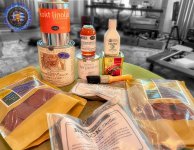
 
Received some new finishes from Europe to try along with multiple kinds of Shellac including seed lac, button shellac, Kusmi and Thai.

Stuff.jpg
 
New arrivals getting in line for a full restoration:


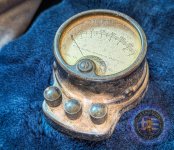
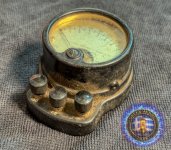
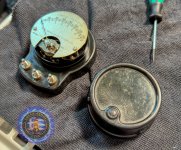
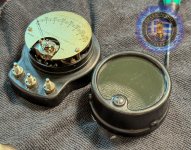
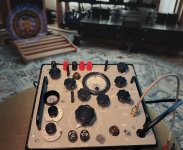
⚡ **1929 Weston Model 537 Radio Tester**

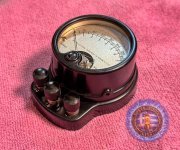
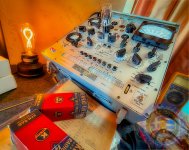
⚡ **1930s Weston Model 489 Precision Meter**


Meter.jpg

IMG_3782.jpg
 
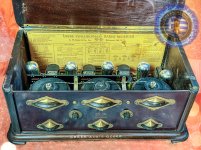
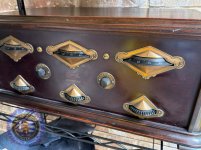
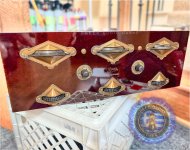
Just received - 1925 Grebe Syncophase radio.

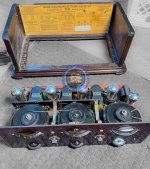
Taken out of the frame so I can try and restore the amp and the frame separately.

I know.....I'll through out all the tube amp and simply put in a 4" x 6" Fosi Class D amp with bluetooth streaming. LOL

I need to start selling off what I refinish to make more room....

R1.jpg


R2.jpg
 
  • Like
Reactions: JDC
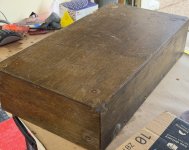
A while back, I received a vintage piece that was packed so poorly it arrived broken into multiple pieces.

I kept it.

Instead of trying to save it as a finished piece, I decided to use it as a restoration test mule — a real-world laboratory for learning more about vintage shellac, old finishes, cleaning methods, refinishing approaches, and how different products behave on 80–100 year old surfaces.

Each side of the piece got a different treatment.
Some areas were sanded back to bare wood.
Some were cleaned with denatured alcohol.
Some were treated with shellac cleaners.
Some were cleaned with steel wool.

Different products were applied to different sections so I could compare how they looked, how they handled, how they blended, and what kind of final glow they produced.

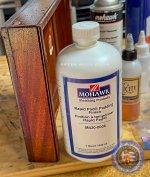
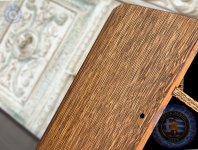
In this photo, I’m using Mohawk Rapid Pad Padding Finish over existing shellac that had already been cleaned and prepared.

It was easy to apply, behaved nicely, and left a very pleasing finish with more of a soft satin glow rather than an overly glossy “new furniture store” shine. Compared with some of the other products I tested, the Mohawk finish had a look that felt very appropriate for vintage gear: clean, revived, warm, and respectful of the age. Certainly not as beautiful as custom mixed Kusmi seed lac from India, but it's certainly much easier to apply.

I’m also experimenting with ways to work on the fine cracking and crazing (you see that in the photo that looks like alligator skin) that is so common on old shellac finishes. You can see it on this piece if you look closely. The biggest issue is the Mohawk nor fresh wash coats of shellac does not deal with crazing and on 80-100 year old shellac the normal way of blending with some fresh DNA barely made a dent in it.

That is the whole point of this kind of testing.

I learn by doing and trying - not just reading or watching a video.

IMG_4053 1.jpg
 
Back
Top