New Vintage Audio Restoration HQ

Really do your level best to avoid using that stuff in the squeeze bottle. Its the sort of thing I mentioned earlier. I've seen people contaminate circuit boards by overzealous use on tube sockets. Nothing for it- the boards had to be replaced. There is a reason they instruct to wipe off excess when using it in the application notes.
 
Really do your level best to avoid using that stuff in the squeeze bottle. Its the sort of thing I mentioned earlier. I've seen people contaminate circuit boards by overzealous use on tube sockets. Nothing for it- the boards had to be replaced. There is a reason they instruct to wipe off excess when using it in the application notes.
Will do. Thanks Ralph.
 
Really do your level best to avoid using that stuff in the squeeze bottle. Its the sort of thing I mentioned earlier. I've seen people contaminate circuit boards by overzealous use on tube sockets. Nothing for it- the boards had to be replaced. There is a reason they instruct to wipe off excess when using it in the application notes.
Have you ever used tai-flow on the pot shafts? People seem to like it but not sure if using a drop of that would be safe.
 
Have you ever used tai-flow on the pot shafts? People seem to like it but not sure if using a drop of that would be safe.
I'm kind of conservative about these things. The shaft of a control is a mechanical thing an so long as the chemistry used isn't going to mess with the metals involved it should be just fine. The problems can start when that chemistry creeps onto the phenolic and other materials used to make up the control or switch. So you just have to be paying attention when you use such things and make sure there's no excess that can cause trouble down the road.

Good electronics are, IMO, built to last but age degrades things. So you want to give it every change to last as long as possible.
 
I'm kind of conservative about these things. The shaft of a control is a mechanical thing an so long as the chemistry used isn't going to mess with the metals involved it should be just fine. The problems can start when that chemistry creeps onto the phenolic and other materials used to make up the control or switch. So you just have to be paying attention when you use such things and make sure there's no excess that can cause trouble down the road.

Good electronics are, IMO, built to last but age degrades things. So you want to give it every change to last as long as possible.

Thanks. I've found the issue I've run into usually isn't the pots/switches themselves, but rather the drying out over 80 years of the lube they used when made.

I agree with you that less is more - I like to use 2 short squirts of the cleaner - let it dry and then just two drops of the F100 lube. I use the plastic rated one as I *believe* it's more gentle than the regular stuff.
 
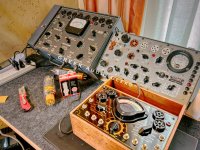
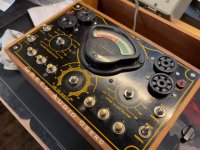
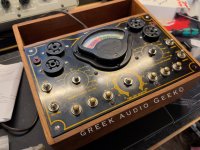
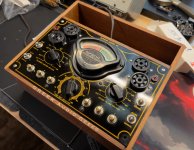
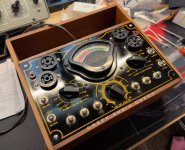
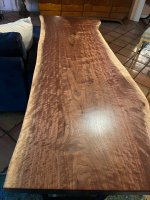
Since I already restored and refinished the wood case on my 1935 Supreme tester I got working again, I wanted to spend some time cleaning the faceplate.

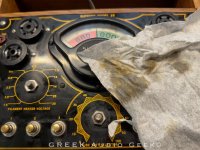
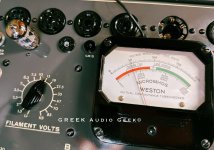
Here are some before and after shots. 2 before - 1 during - and 2 after shots.

I spent about 3 hours carefully first wiping down with a car alcohol cleaner used for wax prep, then carefully and lightly applying about 9 applications of polish from medium up to super fine.

You can see in one image that not only does it remove dirt and grime, but also the gold lettering, so you need to be VERY carefully not to over do it and remove the lettering in the desire to get it clean and remove 90 years of scratches.

I also carefully polished the glass and outside of the meter. I know I can get the entire unit more glossy and cleaner, but I need to leave it as is so I don't damage any of the lettering.

B1.jpg
B2.jpg
B3.jpg
B4.jpg
B5.jpg
 
Dang! I've done stuff like that and have an idea of how much patience it requires. Looks fabulous, from one geek to another!
Thanks! I found for me the hardest part is to resist temptation to simply wipe harder or use more aggressive compound.

I get the best results with as little harm to the gold lettering as possible if I do the opposite of car detailing:

On car detailing you'd wash and then go in with a strong abrasive compound and work you way up to a finer one - usually 2 or 3 steps.

For me I use an "underpowered" medium compound once or twice, then even before it would normally be ready to move up to a fine or super-fine compound I move up to them. Although it will take multiple applications to get to my finally level, numerous gentle applications for me yields better results than a few strong applications for saving the delicate lettering.
 
Back
Top