Network switches?

2FarGone

Member
Joined
Nov 4, 2025
Messages
96
I run a system of reasonably good quality, and currently have a cat 8 line running from a nest router directly to my Directstream DAC. I've been seeing articles about network switches that claim even something as low-end as a simple Cisco network switch can create noticeable improvement in presentation , not to mention the more esoteric audio stuff.

To be clear, I am not a measurements over subjective perception guy, and I’m certainly not seeking to ignite controversy, but I do like to have a little fundamental understanding of what a component is actually doing and what the basis of an audible improvement caused by such a switch might be. Can anyone enlighten me, or refer me to a reliable source of information whereby I might gain better understanding? Unfortunately, many sources do not pass scrutiny as to impartiality, and I have no interest in researching sources that have an axe to grind.

TIA.
 
I went through the same thing a while back. Never really did find anything convincing as to why they might improve the sound. From an intellectual level I am still not convinced.

From a practical standpoint, I decided to try some different options to see for myself. Ended up enjoying the Silent Angel N8. I got mine for around $500 on sale so not really a huge investment, and I do feel like it makes a notable improvement to my listening experience.

For me, much like cables and various other tweaks, I guess the proof is in the listening more so than the explanations. I definitely recommend trying something out to see if it benefits your system at all. It may not, in which case you can be satisfied you've tried and it isn't a factor for your setup.
 
I run a system of reasonably good quality, and currently have a cat 8 line running from a nest router directly to my Directstream DAC. I've been seeing articles about network switches that claim even something as low-end as a simple Cisco network switch can create noticeable improvement in presentation , not to mention the more esoteric audio stuff.

To be clear, I am not a measurements over subjective perception guy, and I’m certainly not seeking to ignite controversy, but I do like to have a little fundamental understanding of what a component is actually doing and what the basis of an audible improvement caused by such a switch might be. Can anyone enlighten me, or refer me to a reliable source of information whereby I might gain better understanding? Unfortunately, many sources do not pass scrutiny as to impartiality, and I have no interest in researching sources that have an axe to grind.

TIA.
If you visit forums frequented by subjectivists, you’ll find plenty of people who are happy to spend hundreds or even thousands of dollars on audiophile network switches. In those circles, the prevailing view is that if you hear an improvement, then the upgrade is worthwhile.

If you visit forums frequented by objectivists, you’ll find people who are perfectly content with inexpensive, low-latency Ethernet switches and who point out that audio data arrives error-free regardless. In those circles, measurements and engineering evidence tend to carry more weight than listening impressions.

You will find explanations of what network switches do (and what they don’t do) in the objectivists sites. But since you stated that you are not a measurement over subjective perception guy, then I am not sure that you will get a satisfactory answer there.
 
Objectivist's say all digital is 1's and 0's and fail to acknowledge and explore noise and timing issues. Objectivists also expect people to believe all audiophiles are somehow under mass delusions. The thing is if a product doesn't do something of value for the customer the business doesn't stay open. Objectivists aren't happy unless they have a parade to urinate on. Actually "objectivists" in the context of this discussion is an irony as they feel if I don't understand it must not exist.

I use the Uptin Ether Regen which is now discontinued a new model is said to be coming someday. Uptin has a White Paper and Q&A how the Regen works on their website to explain how it works. It could provide a bit of what you are looking for.

I was where you are, curious , the Ether Regen was reasonably priced and offered a 30 day return. Like most debated topics you have to try yourself. I put the Regen in my system then took it out, I preferred the sound with the Regen enough to keep it. The difference is enough you don't need a Blind test to hear it makes an improvement. What I noticed was a quieter or more black background which allowed finer detail to be easier heard.

My suggestion would be to research and find one that will allow you to try with a return option. Networks are all different and what worked for me may not for you. If my Regen was to break and couldn't be repaired I would certainly look for another switch with same or better result.
 
If you visit forums frequented by subjectivists, you’ll find plenty of people who are happy to spend hundreds or even thousands of dollars on audiophile network switches. In those circles, the prevailing view is that if you hear an improvement, then the upgrade is worthwhile.

If you visit forums frequented by objectivists, you’ll find people who are perfectly content with inexpensive, low-latency Ethernet switches and who point out that audio data arrives error-free regardless. In those circles, measurements and engineering evidence tend to carry more weight than listening impressions.

You will find explanations of what network switches do (and what they don’t do) in the objectivists sites. But since you stated that you are not a measurement over subjective perception guy, then I am not sure that you will get a satisfactory answer there.
I’m sure that I will not, quite frankly. In audio as in the forbidden arena of politics, I consider myself a centrist. The arguments of the objectivists I generally consider to be specious at best, but neither am I willing to accept the alchemy de jour and spend large amounts of cash on “tweaks” of questionable benefit. It seems to me that a manufacturer should be able to provide a rational explanation as to how their product works and why I should choose to buy it. I can decide for myself whether or not that explanation is plausible.

“Sitting on the fence, that’s a dangerous course. You could even catch a bullet from a peacekeeping force.” Once Upon a Time in the West, Dire Straits
 
Last edited:
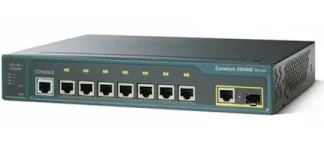
A network switch is supposed to isolate your audio gear from anything else on your network. These other things on your network can cause noise in your audio gear. I use a cheap Cisco 2960 switch, it cost me $60 used if I remember correctly.
I did notice an uplift in sound immediately, I am not an expert by no means, just got the advice on the Cisco from someone who is.
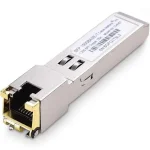
I now use a fiber connection from the Cisco to my Lumin P1 .
 

Attachments

  • IMG_0392.webp
    IMG_0392.webp
    6.9 KB · Views: 2
  • IMG_0393.webp
    IMG_0393.webp
    14.3 KB · Views: 2
  • IMG_0394.webp
    IMG_0394.webp
    6.3 KB · Views: 2
A network switch is supposed to isolate your audio gear from anything else on your network. These other things on your network can cause noise in your audio gear. I use a cheap Cisco 2960 switch, it cost me $60 used if I remember correctly.
I did notice an uplift in sound immediately, I am not an expert by no means, just got the advice on the Cisco from someone who is.
I now use a fiber connection from the Cisco to my Lumin P1 .
And you obviously run a system capable of making those differences apparent. Thank you. 👍
 
Back
Top