
GAN amp/Mytech

Mr Peabody

Well-known member
Joined
Nov 19, 2013
Messages
3,576
Location
St. Louis, MO, USA
Here's a review of the new MyTech GAN monoblocks but what prompted me to post is what Mitchell from Mytech posted in the comments. He explains why he fells GAN is the thing that brings Class D into competition with A or A/B while letting out of the bag why prior designs fall short. So in my opinion it sort of vindicates those of us who are not on the bandwagon for Class D. Maybe see what you guys think.
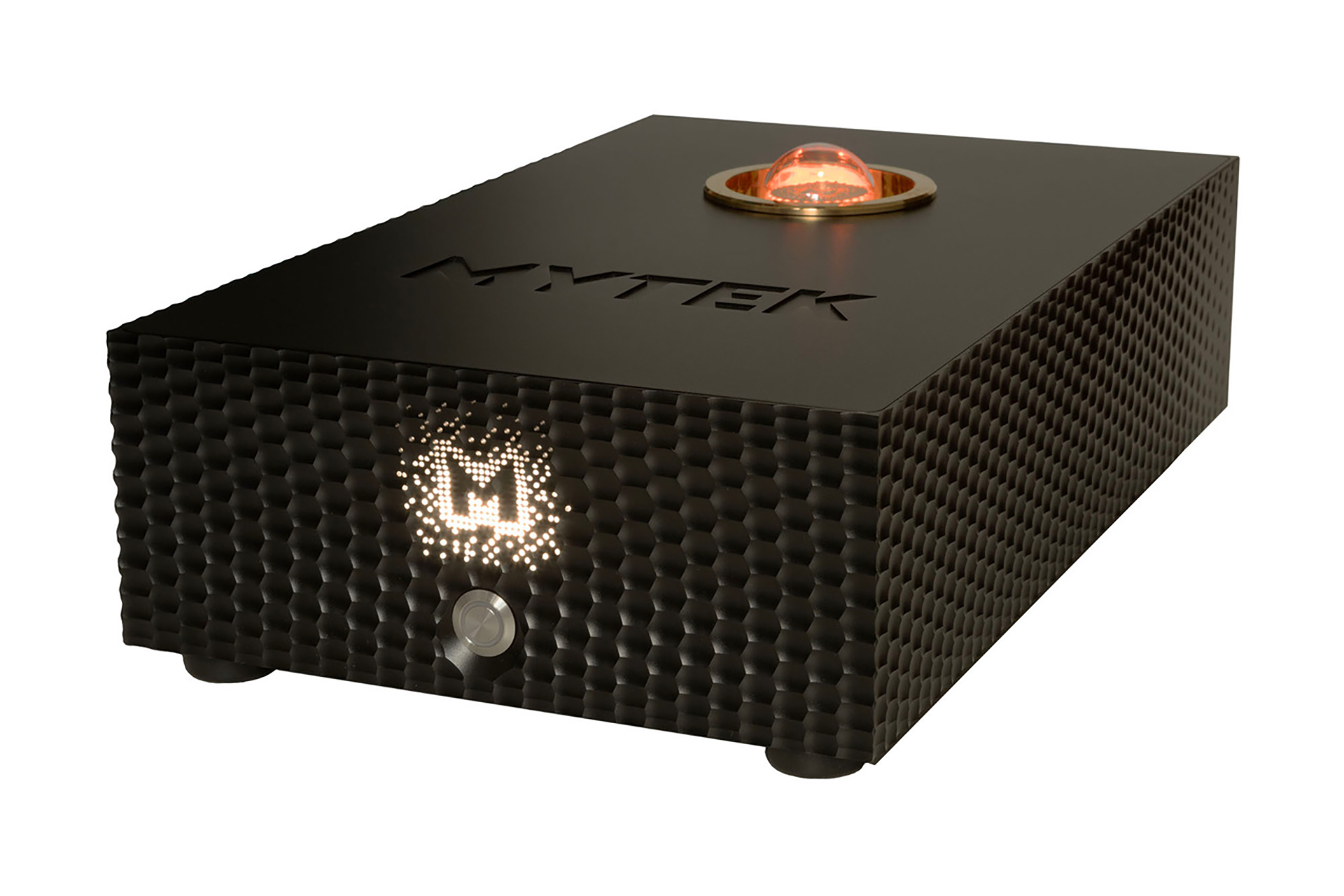
 
Did you read about the glowing orb on the top? Mytek has always had cool aesthetics.
 
Here's a review of the new MyTech GAN monoblocks but what prompted me to post is what Mitchell from Mytech posted in the comments. He explains why he fells GAN is the thing that brings Class D into competition with A or A/B while letting out of the bag why prior designs fall short. So in my opinion it sort of vindicates those of us who are not on the bandwagon for Class D. Maybe see what you guys think.

I can point to some things in that article that are not correct.
The first thing is that AB amps don't suffer crossover distortion any more than class A as long as the AB amp is working properly. That its any other way is a bit of a myth. An AB amp might have a different distortion profile though. If its working right you have no prayer of hearing the 'transition' from A to AB.

Crossover distortion can occur in a class AB amp if its under-biased. At that point its literally a class C amplifier! But I would not regard that as an amp that is working properly.

What he should have pointed out is that class D amps are immune to crossover distortion. Its just not a thing with them so if properly designed can have a very good first Watt.

We designed our GaNFET module too. So the Mytek is not 'unique' in that regard. Not taking anything away from that as designing a class D module is not a trivial task. I suspect that most GaNFET amps have modules designed in-house.
 
I can point to some things in that article that are not correct.
The first thing is that AB amps don't suffer crossover distortion any more than class A as long as the AB amp is working properly. That its any other way is a bit of a myth. An AB amp might have a different distortion profile though. If its working right you have no prayer of hearing the 'transition' from A to AB.

Crossover distortion can occur in a class AB amp if its under-biased. At that point its literally a class C amplifier! But I would not regard that as an amp that is working properly.

What he should have pointed out is that class D amps are immune to crossover distortion. Its just not a thing with them so if properly designed can have a very good first Watt.

We designed our GaNFET module too. So the Mytek is not 'unique' in that regard. Not taking anything away from that as designing a class D module is not a trivial task. I suspect that most GaNFET amps have modules designed in-house.


Yeah, I have to laugh at those who parrot they can hear when Pass transitions from A to A/B. I never heard it then I read an article by Nelson Pass that basically state hearing any transition is impossible. It don't work like that.

It's been a minute since I read that article but I believe they mention your amps in the comparison section.
 
Yeah, I have to laugh at those who parrot they can hear when Pass transitions from A to A/B. I never heard it then I read an article by Nelson Pass that basically state hearing any transition is impossible. It don't work like that.

It's been a minute since I read that article but I believe they mention your amps in the comparison section.
You can hear when amps transfer class operation its load dependent less so at 8 ohm than at 4&2 ohm operation , most obvious is in the top end ..!

If listening classical music for eg , timbre changes on transition orchestra sounds one voiced and not clear at all , Try Beethoven 9th you lose the focus on the choir immediately so a high biased Class A sounds better here ..!

So yes you can hear it , but i do believe most who claim on the PASS is doing so watching the meter..


Regards
 
I can point to some things in that article that are not correct.
The first thing is that AB amps don't suffer crossover distortion any more than class A as long as the AB amp is working properly. That its any other way is a bit of a myth. An AB amp might have a different distortion profile though. If its working right you have no prayer of hearing the 'transition' from A to AB.

Crossover distortion can occur in a class AB amp if its under-biased. At that point its literally a class C amplifier! But I would not regard that as an amp that is working properly.

What he should have pointed out is that class D amps are immune to crossover distortion. Its just not a thing with them so if properly designed can have a very good first Watt.

We designed our GaNFET module too. So the Mytek is not 'unique' in that regard. Not taking anything away from that as designing a class D module is not a trivial task. I suspect that most GaNFET amps have modules designed in-house.
To keep that distortion low with low biased amps you need significant feedback , which class D feeds on …

But you are correct you only need enuff bias to remove crossover distortion , then straight to class B , ala Mcintosh ..!

Regards
 
You can hear when amps transfer class operation its load dependent less so at 8 ohm than at 4&2 ohm operation , most obvious is in the top end ..!

If listening classical music for eg , timbre changes on transition orchestra sounds one voiced and not clear at all , Try Beethoven 9th you lose the focus on the choir immediately so a high biased Class A sounds better here ..!
You are more likely hearing how the feedback is interacting with the amp (or just its distortion signature in general) rather than the transition point! With a lot of amps as you increase the power level, the distortion product changes with more higher ordered harmonics showing up. They cause the amp to sound harsher if not masked (masking higher ordered harmonics is something at which tubes are very good).
But you are correct you only need enuff bias to remove crossover distortion , then straight to class B , ala Mcintosh ..!
Feedback cannot remove crossover distortion.

This is because if there is crossover distortion, then the output devices have gone into cutoff (which is to say they are no longer conducting; they're not doing anything). When that happens, the feedback value falls to zero. IOW there's no feedback at that point. So the amp cannot remove the distortion because there's no correction.

Now if the output devices are in cutoff, then they are not conducting for a full 180 degrees. By definition that is class C.

Class AB amps don't go into cutoff around the zero crossing; at that point they are class A so don't have this problem. So you can see this is only an issue if the AB amp is improperly biased (bias too low).

I think you can see at this point that class B doesn't exist in the real world; only in theory, because by definition, class B is when the output devices are conducting for 180 degrees of the waveform. If more than that they are AB, if less then that then its class C. That theoretical zero point is impossible to achieve.

So all those so-called 'class B' amplifiers are for the most part just very lightly biased AB amps.
 
Never said feedback removes crossover distortion , feedback is necessary for stability in class B , as most of those kind of amps have poor open loop gain ..!

Regards
 
Last edited:
You are more likely hearing how the feedback is interacting with the amp (or just its distortion signature in general) rather than the transition point! With a lot of amps as you increase the power level, the distortion product changes with more higher ordered harmonics showing up. They cause the amp to sound harsher if not masked (masking higher ordered harmonics is something at which tubes are very good).

Feedback cannot remove crossover distortion.

This is because if there is crossover distortion, then the output devices have gone into cutoff (which is to say they are no longer conducting; they're not doing anything). When that happens, the feedback value falls to zero. IOW there's no feedback at that point. So the amp cannot remove the distortion because there's no correction.

Now if the output devices are in cutoff, then they are not conducting for a full 180 degrees. By definition that is class C.

Class AB amps don't go into cutoff around the zero crossing; at that point they are class A so don't have this problem. So you can see this is only an issue if the AB amp is improperly biased (bias too low).

I think you can see at this point that class B doesn't exist in the real world; only in theory, because by definition, class B is when the output devices are conducting for 180 degrees of the waveform. If more than that they are AB, if less then that then its class C. That theoretical zero point is impossible to achieve.

So all those so-called 'class B' amplifiers are for the most part just very lightly biased AB amps.
So an Amp biased at 5 watts classA operating at 50 watts RMS is ..?

At that point its in class B operation Once output power exceeds that bias point, one device stops conducting for part of the waveform ..!

Saying class AB is standard fare..,

Regards
 
Never said feedback removes crossover distortion , feedback is necessary for stability in class B , as most of those kind of amps have poor open loop gain ..!

Regards
Sorry about that- I misread your comment and went down the wrong rabbit hole...

So an Amp biased at 5 watts classA operating at 50 watts RMS is ..?

At that point its in class B operation Once output power exceeds that bias point, one device stops conducting for part of the waveform ..!

Saying class AB is standard fare..,

Regards
A 50 Watt amp that makes 5 Watt in its class A zone is a class AB amp. The bias level insures that there's no crossover distortion as you rightly stated earlier.

There are a lot of factors in play with any AB amp (for example a Dynaco ST70, or a Pass Labs amp). The way the feedback loop is designed, how much feedback there is, how many stages of gain exist, how many poles or zeros that might exist if there is an output transformer and so on. Its really not correct to generically say you can hear the transition in a class AB amp. It might be more correct that in some of them you can, but I think that would have to be something that was definitively proven rather that left to anecdote.
 
Back
Top