
_theaudiofile
New member
- Joined
- Apr 13, 2026
- Messages
- 20
- Thread Author
- #1
Been testing the new Fosi Audio C3 desktop unit for just over two weeks now. As a long-time audio hobbyist, I usually run standalone DACs and dedicated hifi stacks, this was a good opportunity to see if this hybrid box offered something useful or if it was another budget “AI” gaming gadget.
In a nutshell, The Fosi Audio C3 is a gaming DAC and headphone amplifier built on a HiFi audio architecture. It uses StepSense Smart Enhancement technology to provide high-fidelity audio for general entertainment while isolating and clarifying footstep sounds in supported FPS games without increasing the volume of gunfire or explosions
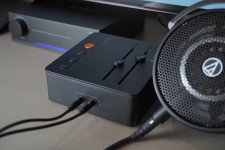
I tested the unit with my open-back Audio-Technica ATH-R50x reference headphones, and the Juzear x Z Reviews Defiant Gamefidelity Edition hybrid IEMs.
Apologies if this is the wrong section, I'm not quite sure where it sits best.
What’s in the Box:
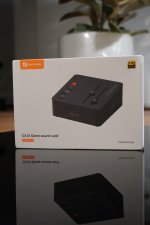
The unboxing experience is minimal and straightforward.
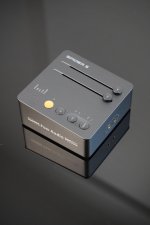
The Fosi Audio C3 Unit: The actual CNC aluminum hardware interface.
Design:
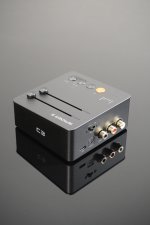
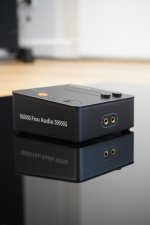
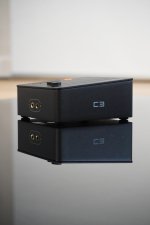
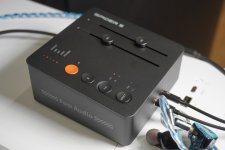
The C3 is built like a mini tank. All-metal case constructed from CNC aluminum alloy roughly the size of a square cup coaster. The control surface is an inclined 5-degree design that makes desktop access comfortable.
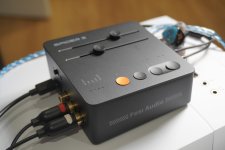
The interface relies on four physical face buttons and two vertical sliders on the right edge. These faders manage independent headphone volume and mic level, it slides smoothly and with a bit of satisfying resistance. Being able to adjust volumes mid-match by muscle memory is practical.
My first critique is the text printing. Fosi utilized tiny font markings and a low-contrast gray design that makes every button and status indicator a bit difficult to read.
Gaming in a dark room, I had a bit of trouble identifying what mode is active without leaning directly over the box or getting closer.
Input and Output
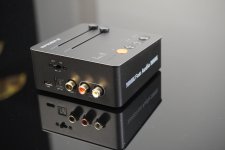
On the rear, there is a USB-C input (handling data and power entirely without an external power brick), an Optical input, a Coaxial input, and a pair of stereo RCA line outputs. The front carries standard 3.5mm jacks for both headphones and microphones.
Because the rear RCA outputs are volume-controlled directly by the top master slider, the C3 functions perfectly as a central desktop preamp for active speakers or an external speaker amp.
Sound Performance
Internally, it sports the XMOS XU316 processor, a Cirrus Logic CS43131 32-bit DAC chip, and a Texas Instruments TPA6120A2 amplifier stage. Stripping away the gaming modes, the native sound profile is transparent, clean and analytical.
Power & Noise
The C3 is USB powered from the computer rather than plugging into a wall outlet, it has less electrical "room to breathe" at max volumes. It delivers massive volume for standard headphones and IEMs, but if you plug in power-hungry, hard-to-drive planar magnetic headphones and max out the slider, the sound will distort and clip much quicker than it would on a traditional wall-powered desktop amp.
A quick note on background noise: If you use highly sensitive, easy-to-drive IEMs like the Defiant, you might notice a very faint background hiss when your computer is completely silent. The good news is that the second your game audio or music starts playing, the hiss completely disappears.
Trade-offs
The dedicated UAC hardware button has a technical trade-off:
StepSense Smart Enhancement & Spatial Audio
The StepSense Smart Enhancement function utilizing an internal model the brand calls SPIDER S. The internal XMOS chip runs an acoustic pattern recognition model locally on the hardware. It analyzes audio frames in a real-time window, looking specifically for the short, low-amplitude transient sounds that match the signature frequency profiles of footsteps.
Fosi claims that the technology is optimized for FPS games such as CS2 and PUBG and is trained by using their datasets to amplify footsteps while leaving gunfire and explosion levels unchanged.
Gaming Performance
In natively supported tactical shooters like Counter-Strike 2, PUBG, Delta Force and Valorant, the feature actually does something. Setting StepSense to the "High" preset boosts targeted footstep frequencies by roughly 9dB without distorting the rest of the sound mix.
Pairing the ATH-R50x with StepSense active gave me excellent wall-angle localization for approaching enemies. With the Juzear Defiant, the processing successfully thinned out the heavy, deep sub-bass environment, preventing massive grenade explosions from masking the subtle scrape of an enemy step.
Fosi uses a web portal to update the firmware and expand support (with profiles for Apex Legends and Battlefield appearing).
The C3 includes a 7.1 spatial audio mode. While it works well with movies and cinematic single-player games to make the environment feel more immersive, it makes the mid-range sound shallow and artificial in tactical shooters. I recommend sticking to standard Stereo for competitive positioning.
Mic Input & Noise Cancellation
There is a physical toggle switch on the back panel for hardware-level Noise Cancellation for the 3.5mm mic input.
Testing this with the inline mic on the Juzear Defiant while typing on a loud mechanical keyboard directly underneath it with an air conditioner running, the suppression is surprisingly effective. It minimise away steady background drone and keyboard clicks cleanly.
Web Driver Interface
To fully customize, control, and fine-tune the advanced settings, the C3 uses an online web-based driver (cc.fosiaudio.com) instead of a an application.
Plug the C3 in via USB, load the browser link, click connect, and you have instant direct control over the hardware parameters. From the web portal, you can manage your UAC toggles, adjust StepSense gain parameters, flash the hardware firmware, and access a deep 8-band precision parametric EQ (PEQ) with a ±6dB to tune your gear to your preference.
However, this means that If the online web driver ever goes offline or the brand decides to stop hosting the URL years down the road, you lose total access to the advanced settings; unlike an installable offline driver installer that you can preserve forever on a hard drive.
Conclusion
After two weeks of daily use, the Fosi Audio C3 is a very capable little desktop tool. It bridges the gap between clean hifi audio components and practical gaming utility without forcing you to install bloated software suites.
If you are an audio hobbyist looking for a clean, compact desktop sound card to drive standard reference headphones or hybrid IEMs, value physical controls, and want a practical edge in tactical shooters without managing heavy software suites, the C3 is a solid option for the price.
If you've made it this far, thank you for reading.
In a nutshell, The Fosi Audio C3 is a gaming DAC and headphone amplifier built on a HiFi audio architecture. It uses StepSense Smart Enhancement technology to provide high-fidelity audio for general entertainment while isolating and clarifying footstep sounds in supported FPS games without increasing the volume of gunfire or explosions
I tested the unit with my open-back Audio-Technica ATH-R50x reference headphones, and the Juzear x Z Reviews Defiant Gamefidelity Edition hybrid IEMs.
Apologies if this is the wrong section, I'm not quite sure where it sits best.
What’s in the Box:
The unboxing experience is minimal and straightforward.
The Fosi Audio C3 Unit: The actual CNC aluminum hardware interface.
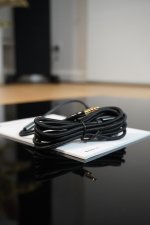
- USB-A/C to USB-C Cable: A braided long cable that handles data and 5V power from your machine. The PC side has a tethered USB-A adapter attached to the USB-C plug, so you don't have to go hunting for a dongle if your motherboard lacks an open C-port.
- Microphone / Audio Y-Splitter Cable: A short 3.5mm adapter that splits a single, combined 4-pole gaming headset plug into separate, dedicated headphone and microphone plugs to feed the front jacks. It saves you from buying an extra accessory just to connect your mic.
- User Manual: A basic instruction booklet detailing the interface, button functions, and the setup URL for the web portal.
Design:
The C3 is built like a mini tank. All-metal case constructed from CNC aluminum alloy roughly the size of a square cup coaster. The control surface is an inclined 5-degree design that makes desktop access comfortable.
The interface relies on four physical face buttons and two vertical sliders on the right edge. These faders manage independent headphone volume and mic level, it slides smoothly and with a bit of satisfying resistance. Being able to adjust volumes mid-match by muscle memory is practical.
My first critique is the text printing. Fosi utilized tiny font markings and a low-contrast gray design that makes every button and status indicator a bit difficult to read.
Gaming in a dark room, I had a bit of trouble identifying what mode is active without leaning directly over the box or getting closer.
Input and Output
On the rear, there is a USB-C input (handling data and power entirely without an external power brick), an Optical input, a Coaxial input, and a pair of stereo RCA line outputs. The front carries standard 3.5mm jacks for both headphones and microphones.
Because the rear RCA outputs are volume-controlled directly by the top master slider, the C3 functions perfectly as a central desktop preamp for active speakers or an external speaker amp.
Sound Performance
Internally, it sports the XMOS XU316 processor, a Cirrus Logic CS43131 32-bit DAC chip, and a Texas Instruments TPA6120A2 amplifier stage. Stripping away the gaming modes, the native sound profile is transparent, clean and analytical.
- Audio-Technica ATH-R50x: The mid-range sounds crisp, airy, and beautifully layered. The spatial representation feels realistic and grounded. I rarely found myself pushing the physical volume slider past 45–50% to get a fully dynamic presentation.
- Juzear x Z Reviews Defiant: The clean, uncolored nature of the CS43131 DAC acts as a fantastic counterweight to the Defiant's thick low-end, keeping the deep sub-bass rumbles tight and fast so they don't smear into the lower mid-range.
Power & Noise
The C3 is USB powered from the computer rather than plugging into a wall outlet, it has less electrical "room to breathe" at max volumes. It delivers massive volume for standard headphones and IEMs, but if you plug in power-hungry, hard-to-drive planar magnetic headphones and max out the slider, the sound will distort and clip much quicker than it would on a traditional wall-powered desktop amp.
A quick note on background noise: If you use highly sensitive, easy-to-drive IEMs like the Defiant, you might notice a very faint background hiss when your computer is completely silent. The good news is that the second your game audio or music starts playing, the hiss completely disappears.
Trade-offs
The dedicated UAC hardware button has a technical trade-off:
- UAC 2.0 (Hi-Fi Mode): Unlocks the DAC’s full high-resolution capabilities (up to 32-bit/384kHz PCM and DSD256) for pure music listening. However, the microphone port, spatial audio and StepSense features are disabled.
- UAC 1.0 (Gaming Mode): Limits the max resolution to standard 16-bit or 24-bit/48kHz, but it activates the microphone path and all internal DSP processing.
StepSense Smart Enhancement & Spatial Audio
The StepSense Smart Enhancement function utilizing an internal model the brand calls SPIDER S. The internal XMOS chip runs an acoustic pattern recognition model locally on the hardware. It analyzes audio frames in a real-time window, looking specifically for the short, low-amplitude transient sounds that match the signature frequency profiles of footsteps.
Fosi claims that the technology is optimized for FPS games such as CS2 and PUBG and is trained by using their datasets to amplify footsteps while leaving gunfire and explosion levels unchanged.
Gaming Performance
In natively supported tactical shooters like Counter-Strike 2, PUBG, Delta Force and Valorant, the feature actually does something. Setting StepSense to the "High" preset boosts targeted footstep frequencies by roughly 9dB without distorting the rest of the sound mix.
Pairing the ATH-R50x with StepSense active gave me excellent wall-angle localization for approaching enemies. With the Juzear Defiant, the processing successfully thinned out the heavy, deep sub-bass environment, preventing massive grenade explosions from masking the subtle scrape of an enemy step.
Fosi uses a web portal to update the firmware and expand support (with profiles for Apex Legends and Battlefield appearing).
The C3 includes a 7.1 spatial audio mode. While it works well with movies and cinematic single-player games to make the environment feel more immersive, it makes the mid-range sound shallow and artificial in tactical shooters. I recommend sticking to standard Stereo for competitive positioning.
Mic Input & Noise Cancellation
There is a physical toggle switch on the back panel for hardware-level Noise Cancellation for the 3.5mm mic input.
Testing this with the inline mic on the Juzear Defiant while typing on a loud mechanical keyboard directly underneath it with an air conditioner running, the suppression is surprisingly effective. It minimise away steady background drone and keyboard clicks cleanly.
Web Driver Interface
To fully customize, control, and fine-tune the advanced settings, the C3 uses an online web-based driver (cc.fosiaudio.com) instead of a an application.
Plug the C3 in via USB, load the browser link, click connect, and you have instant direct control over the hardware parameters. From the web portal, you can manage your UAC toggles, adjust StepSense gain parameters, flash the hardware firmware, and access a deep 8-band precision parametric EQ (PEQ) with a ±6dB to tune your gear to your preference.
However, this means that If the online web driver ever goes offline or the brand decides to stop hosting the URL years down the road, you lose total access to the advanced settings; unlike an installable offline driver installer that you can preserve forever on a hard drive.
Conclusion
After two weeks of daily use, the Fosi Audio C3 is a very capable little desktop tool. It bridges the gap between clean hifi audio components and practical gaming utility without forcing you to install bloated software suites.
If you are an audio hobbyist looking for a clean, compact desktop sound card to drive standard reference headphones or hybrid IEMs, value physical controls, and want a practical edge in tactical shooters without managing heavy software suites, the C3 is a solid option for the price.
If you've made it this far, thank you for reading.