
You are using an out of date browser. It may not display this or other websites correctly.
You should upgrade or use an alternative browser.
You should upgrade or use an alternative browser.
A pic of my Aria's in process
- Thread starter fxe02
- Start date
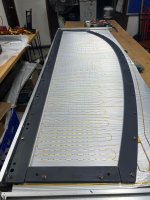
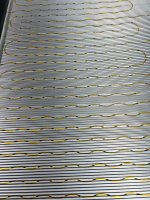
Congratulations!Florian was gracious enough to send a pic of my speakers as a work in process. Shooting for an early march delivery.View attachment 35201View attachment 35202
Clearly an exaggeration, but let’s be honest, for an audiophile, waiting for the delivery of the latest gadget can feel almost like waiting for a child


Michaels HiFi
Well-known member
Florian was gracious enough to send a pic of my speakers as a work in process. Shooting for an early march delivery.View attachment 35201View attachment 35202
Amazing! They are going to sound fantastic.

the professor
Well-known member
They are amazing speakers!!!!!
Patience will be rewarded!!!!!
What color did you go with?
Patience will be rewarded!!!!!
What color did you go with?
ok. In WBF, someone said the bass panel of Clarysis speaker is planar and not ribbon.Ribbon
ClarisysAudio
Active member
Hello everyone
Ah yes — WBF. The place where opinions circulate faster than understanding, often helped along by sponsorships and conveniently aligned narratives. A wonderful way to start the day.
At this point, it’s probably time to open a Clarisys Audio Owners Forum.
Nudge, nudge to our friend Mike Now to the actual question.
The WBF thread in question was started by a Clarisys owner who previously owned Alsyvox and chose to replace it with Clarisys, citing limited dynamics and bass performance as the decisive reasons.
For clarity: Clarisys Audio now owns that Alsyvox speaker.
What follows is not speculation or forum theory, but a technical explanation of why that experience occurred.
Yes, you can partially compensate for this by adding push-pull magnet arrays on both sides of the diaphragm. But let’s be honest: this is a band-aid, not an elegant solution. You are using magnetic force to compensate for a material that fundamentally lacks mechanical control.
A corrugated aluminium ribbon, on the other hand, is a mechanical spring system by design. The corrugation is the restoring force. Lightly displace a Clarisys diaphragm and it returns automatically to its center position, without relying on additional magnetic correction in front of the driver. This is not theoretical — it is directly observable.
But physics doesn’t care about forum narratives.
If we want a serious discussion, we need to stop blurring the line between true ribbons and planar magnetics, and stop pretending that material science and restoring force are optional details.
Unlike Alsyvox, we no longer use Mylar/Kapton-based aluminium traces in our midrange and treble. Those approaches belong to an earlier generation of planar thinking.
Instead, Clarisys employs:
In many ways, this represents a “Generation 3000” evolution of the original Apogee Acoustics (1980s to early 2000s) concept — a lineage we openly acknowledge and respect. Without Apogee Acoustics, none of this would exist
We owe Apogee Acoustics (1980s to early 2000s) everything.
But we are not repeating it — we are finishing what they started.
Ah yes — WBF. The place where opinions circulate faster than understanding, often helped along by sponsorships and conveniently aligned narratives. A wonderful way to start the day.
At this point, it’s probably time to open a Clarisys Audio Owners Forum.
Nudge, nudge to our friend Mike
Now to the actual question.The WBF thread in question was started by a Clarisys owner who previously owned Alsyvox and chose to replace it with Clarisys, citing limited dynamics and bass performance as the decisive reasons.
For clarity: Clarisys Audio now owns that Alsyvox speaker.
What follows is not speculation or forum theory, but a technical explanation of why that experience occurred.
Ribbon vs. Planar Magnetic
Let’s get terminology straight first, because this is where the discussion usually derails.- A true ribbon is suspended between two fixing points inside a magnetic field.
- The moment a diaphragm is fixed on all four sides, it is no longer a ribbon in the strict sense — it is a planar magnetic driver.
- The Alsyvox bass section is attached on four sides, like the Magnepan.
- Clarisys bass ribbons are attached on two sides only. This distinction is not semantic — it is fundamental.
Restoring Force – Corrugation & Material Science
A diaphragm made from Mylar or similar polymer films has no intrinsic restoring force. The material flexes, creeps, and does not naturally return to a precise neutral position. The audible result is reduced control, softer transients, and limited bass dynamics.Yes, you can partially compensate for this by adding push-pull magnet arrays on both sides of the diaphragm. But let’s be honest: this is a band-aid, not an elegant solution. You are using magnetic force to compensate for a material that fundamentally lacks mechanical control.
A corrugated aluminium ribbon, on the other hand, is a mechanical spring system by design. The corrugation is the restoring force. Lightly displace a Clarisys diaphragm and it returns automatically to its center position, without relying on additional magnetic correction in front of the driver. This is not theoretical — it is directly observable.
Implementation Differences (Often Ignored in Online Debates)
- Clarisys bass ribbons use
- Corrugated aluminium diaphragm
- Two-side suspension, not four-side clamping
- Internal mechanical spring behavior via corrugation
- Dedicated horizontal tensioning systems per bass ribbon section
- Restoring force is built into the membrane and the mechanics, not outsourced to magnet strength
- Alsyvox bass panelsuse
- A polymer-based membrane
- Four-side attachment
- No intrinsic mechanical restoring force
- No horizontal tensioning system
Final note to WBF readers
Disagreeing is fine. Preferences are subjective.But physics doesn’t care about forum narratives.
If we want a serious discussion, we need to stop blurring the line between true ribbons and planar magnetics, and stop pretending that material science and restoring force are optional details.
A necessary clarification on ribbon technology leadership
Clarisys Audio is currently the leader in ribbon loudspeaker innovation. Not by branding, but by engineering.Unlike Alsyvox, we no longer use Mylar/Kapton-based aluminium traces in our midrange and treble. Those approaches belong to an earlier generation of planar thinking.
Instead, Clarisys employs:
- Pure aluminium ribbons
- Zero vertical support
- True free-suspended ribbon operation
- Bipolar radiation
- Transformer-coupled drive topology
In many ways, this represents a “Generation 3000” evolution of the original Apogee Acoustics (1980s to early 2000s) concept — a lineage we openly acknowledge and respect. Without Apogee Acoustics, none of this would exist
We owe Apogee Acoustics (1980s to early 2000s) everything.
But we are not repeating it — we are finishing what they started.
Last edited:
ClarisysAudio
Active member
Thank you — yes, the website is currently being updated.Great explanation. Very clear now. I suggest to put this information remove the Alsyvox bit in your website.
That said, customers ultimately decide with their ears, not with websites.
Clarisys is growing and expanding steadily. I only step into these discussions to prevent random individuals from spreading misinformation and to keep the technical facts straight.
There are two guys saying the bass panels are planar. Especially one guy is always writing as authority. Maybe you want to clarify.Thank you — yes, the website is currently being updated.
That said, customers ultimately decide with their ears, not with websites.
Clarisys is growing and expanding steadily. I only step into these discussions to prevent random individuals from spreading misinformation and to keep the technical facts straight.
Alsyvox planars...prepare to sell your Magico's, YG's, Wilson's, Cessaro's. Maggie's, and all others!!
Well, when you consider low frequency, you can't compare Alsyvox and Quad... By the way, everyone who came to listen to my system was astonished by the "abyssal" low frequency register, including professionals who dont sell Alsyvox. What is your reference speaker concerning what you call bass...
 www.whatsbestforum.com
ClarisysAudio
Active member
Not interested. But thank youThere are two guys saying the bass panels are planar. Especially one guy is always writing as authority. Maybe you want to clarify.
Alsyvox planars...prepare to sell your Magico's, YG's, Wilson's, Cessaro's. Maggie's, and all others!!
Well, when you consider low frequency, you can't compare Alsyvox and Quad... By the way, everyone who came to listen to my system was astonished by the "abyssal" low frequency register, including professionals who dont sell Alsyvox. What is your reference speaker concerning what you call bass...

I dont pay them money and I dont argue with fake distributors, dealers and rich old people with nothing better to do then write on WBF. Our time is better used on serving our customers.
fxe02
Active member
- Thread Author
- #14
Thanks Florian !Hello everyone
Ah yes — WBF. The place where opinions circulate faster than understanding, often helped along by sponsorships and conveniently aligned narratives. A wonderful way to start the day.
At this point, it’s probably time to open a Clarisys Audio Owners Forum.
Nudge, nudge to our friend Mike
The WBF thread in question was started by a Clarisys owner who previously owned Alsyvox and chose to replace it with Clarisys, citing limited dynamics and bass performance as the decisive reasons.
For clarity: Clarisys Audio now owns that Alsyvox speaker.
What follows is not speculation or forum theory, but a technical explanation of why that experience occurred.
Ribbon vs. Planar Magnetic
Let’s get terminology straight first, because this is where the discussion usually derails.
Calling both designs “ribbons” may sound convenient in forum discussions, but it ignores basic mechanics.
- A true ribbon is suspended between two fixing points inside a magnetic field.
- The moment a diaphragm is fixed on all four sides, it is no longer a ribbon in the strict sense — it is a planar magnetic driver.
- The Alsyvox bass section is attached on four sides, like the Magnepan.
- Clarisys bass ribbons are attached on two sides only. This distinction is not semantic — it is fundamental.
Restoring Force – Corrugation & Material Science
A diaphragm made from Mylar or similar polymer films has no intrinsic restoring force. The material flexes, creeps, and does not naturally return to a precise neutral position. The audible result is reduced control, softer transients, and limited bass dynamics.
Yes, you can partially compensate for this by adding push-pull magnet arrays on both sides of the diaphragm. But let’s be honest: this is a band-aid, not an elegant solution. You are using magnetic force to compensate for a material that fundamentally lacks mechanical control.
A corrugated aluminium ribbon, on the other hand, is a mechanical spring system by design. The corrugation is the restoring force. Lightly displace a Clarisys diaphragm and it returns automatically to its center position, without relying on additional magnetic correction in front of the driver. This is not theoretical — it is directly observable.
Implementation Differences (Often Ignored in Online Debates)
These are design choices, not value judgments — but pretending they are equivalent is simply incorrect.
- Clarisys bass ribbons use
- Corrugated aluminium diaphragm
- Two-side suspension, not four-side clamping
- Internal mechanical spring behavior via corrugation
- Dedicated horizontal tensioning systems per bass ribbon section
- Restoring force is built into the membrane and the mechanics, not outsourced to magnet strength
- Alsyvox bass panelsuse
- A polymer-based membrane
- Four-side attachment
- No intrinsic mechanical restoring force
- No horizontal tensioning system
Final note to WBF readers
Disagreeing is fine. Preferences are subjective.
But physics doesn’t care about forum narratives.
If we want a serious discussion, we need to stop blurring the line between true ribbons and planar magnetics, and stop pretending that material science and restoring force are optional details.
A necessary clarification on ribbon technology leadership
Clarisys Audio is currently the leader in ribbon loudspeaker innovation. Not by branding, but by engineering.
Unlike Alsyvox, we no longer use Mylar/Kapton-based aluminium traces in our midrange and treble. Those approaches belong to an earlier generation of planar thinking.
Instead, Clarisys employs:
This is a true ribbon in the strict mechanical and electromagnetic sense — not a planar magnetic reinterpretation.
- Pure aluminium ribbons
- Zero vertical support
- True free-suspended ribbon operation
- Bipolar radiation
- Transformer-coupled drive topology
In many ways, this represents a “Generation 3000” evolution of the original Apogee Acoustics (1980s to early 2000s) concept — a lineage we openly acknowledge and respect. Without Apogee Acoustics, none of this would exist
We owe Apogee Acoustics (1980s to early 2000s) everything.
But we are not repeating it — we are finishing what they started.
fxe02
Active member
- Thread Author
- #15
The methodology for the corrugation has to be totally unique . I have seen the machine Raal uses to make its ribbon tweeters. It is tiny , cumbersome , and appears subject to human error. To corrugate the massive bass panel , and account for different size corrugations , has to be a complex process . Check out the pic's of my Aria's and note the corrugation size differences. There are multifaceted considerations built into its construction. This speaker is a giant leap forward in out of the box thinking !Hello everyone
Ah yes — WBF. The place where opinions circulate faster than understanding, often helped along by sponsorships and conveniently aligned narratives. A wonderful way to start the day.
At this point, it’s probably time to open a Clarisys Audio Owners Forum.
Nudge, nudge to our friend Mike
The WBF thread in question was started by a Clarisys owner who previously owned Alsyvox and chose to replace it with Clarisys, citing limited dynamics and bass performance as the decisive reasons.
For clarity: Clarisys Audio now owns that Alsyvox speaker.
What follows is not speculation or forum theory, but a technical explanation of why that experience occurred.
Ribbon vs. Planar Magnetic
Let’s get terminology straight first, because this is where the discussion usually derails.
Calling both designs “ribbons” may sound convenient in forum discussions, but it ignores basic mechanics.
- A true ribbon is suspended between two fixing points inside a magnetic field.
- The moment a diaphragm is fixed on all four sides, it is no longer a ribbon in the strict sense — it is a planar magnetic driver.
- The Alsyvox bass section is attached on four sides, like the Magnepan.
- Clarisys bass ribbons are attached on two sides only. This distinction is not semantic — it is fundamental.
Restoring Force – Corrugation & Material Science
A diaphragm made from Mylar or similar polymer films has no intrinsic restoring force. The material flexes, creeps, and does not naturally return to a precise neutral position. The audible result is reduced control, softer transients, and limited bass dynamics.
Yes, you can partially compensate for this by adding push-pull magnet arrays on both sides of the diaphragm. But let’s be honest: this is a band-aid, not an elegant solution. You are using magnetic force to compensate for a material that fundamentally lacks mechanical control.
A corrugated aluminium ribbon, on the other hand, is a mechanical spring system by design. The corrugation is the restoring force. Lightly displace a Clarisys diaphragm and it returns automatically to its center position, without relying on additional magnetic correction in front of the driver. This is not theoretical — it is directly observable.
Implementation Differences (Often Ignored in Online Debates)
These are design choices, not value judgments — but pretending they are equivalent is simply incorrect.
- Clarisys bass ribbons use
- Corrugated aluminium diaphragm
- Two-side suspension, not four-side clamping
- Internal mechanical spring behavior via corrugation
- Dedicated horizontal tensioning systems per bass ribbon section
- Restoring force is built into the membrane and the mechanics, not outsourced to magnet strength
- Alsyvox bass panelsuse
- A polymer-based membrane
- Four-side attachment
- No intrinsic mechanical restoring force
- No horizontal tensioning system
Final note to WBF readers
Disagreeing is fine. Preferences are subjective.
But physics doesn’t care about forum narratives.
If we want a serious discussion, we need to stop blurring the line between true ribbons and planar magnetics, and stop pretending that material science and restoring force are optional details.
A necessary clarification on ribbon technology leadership
Clarisys Audio is currently the leader in ribbon loudspeaker innovation. Not by branding, but by engineering.
Unlike Alsyvox, we no longer use Mylar/Kapton-based aluminium traces in our midrange and treble. Those approaches belong to an earlier generation of planar thinking.
Instead, Clarisys employs:
This is a true ribbon in the strict mechanical and electromagnetic sense — not a planar magnetic reinterpretation.
- Pure aluminium ribbons
- Zero vertical support
- True free-suspended ribbon operation
- Bipolar radiation
- Transformer-coupled drive topology
In many ways, this represents a “Generation 3000” evolution of the original Apogee Acoustics (1980s to early 2000s) concept — a lineage we openly acknowledge and respect. Without Apogee Acoustics, none of this would exist
We owe Apogee Acoustics (1980s to early 2000s) everything.
But we are not repeating it — we are finishing what they started.
the professor
Well-known member
Cool - I’m sure they will look fantastic.Bronze- Florian’s idea!
I was boring with all black like the pics on their website.
ggdudeabides
Active member
Indeed. Lots of OCD types. And a lot of bickering and personal attacks from my experience. I remember one response to a thread I started. where the first responder criticized my grammar even though I thought it was correct. My fuc...'in grammar !!!. And the mod came down on me for my response. That was the final straw for me. Very different vibe than AS. I do like Steve, one of the owners. In the end, if people enjoy posting there, that's all that matters.Hello everyone
Ah yes — WBF. The place where opinions circulate faster than understanding, often helped along by sponsorships and conveniently aligned narratives. A wonderful way to start the day.
Last edited: